Innovation on the Plate: A Conversation with Chris Ince, Chef Director

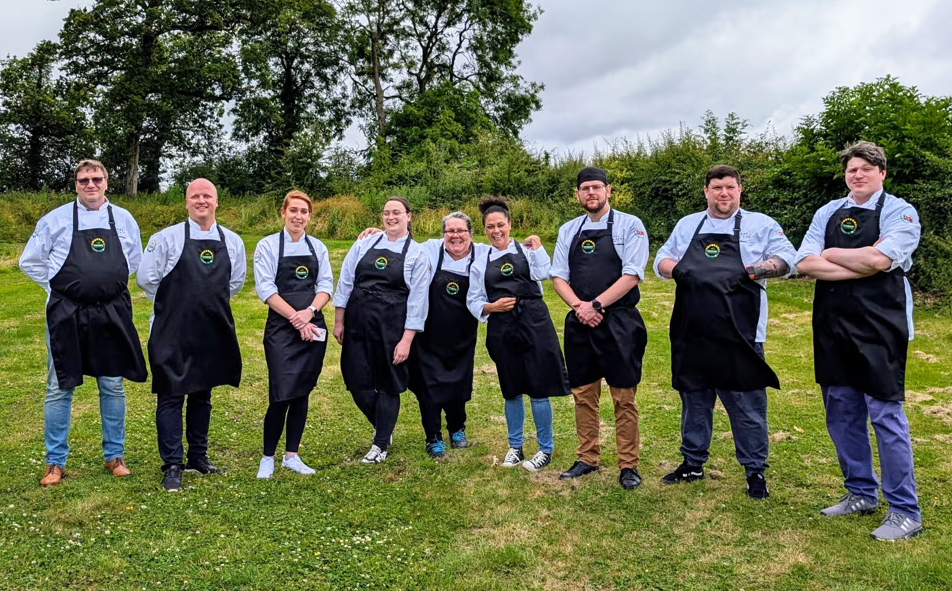
Innovation has become a defining force in modern food service. As expectations rise across workplace dining, caterers are being challenged to deliver food that is creative, relevant, responsible and operationally sound. At Angel Hill Food Co., catering innovation is not a trend-driven exercise – it is a disciplined, collaborative approach to shaping the future of food at work.

We sat down with Chris Ince, Chef Director, to explore what innovation really means in today’s catering landscape, how ideas are brought to life, and how Angel Hill continues to innovate catering in ways that matter to customers and colleagues alike.

Chris, what does “innovation” actually mean in a catering context today?

Chris Ince:

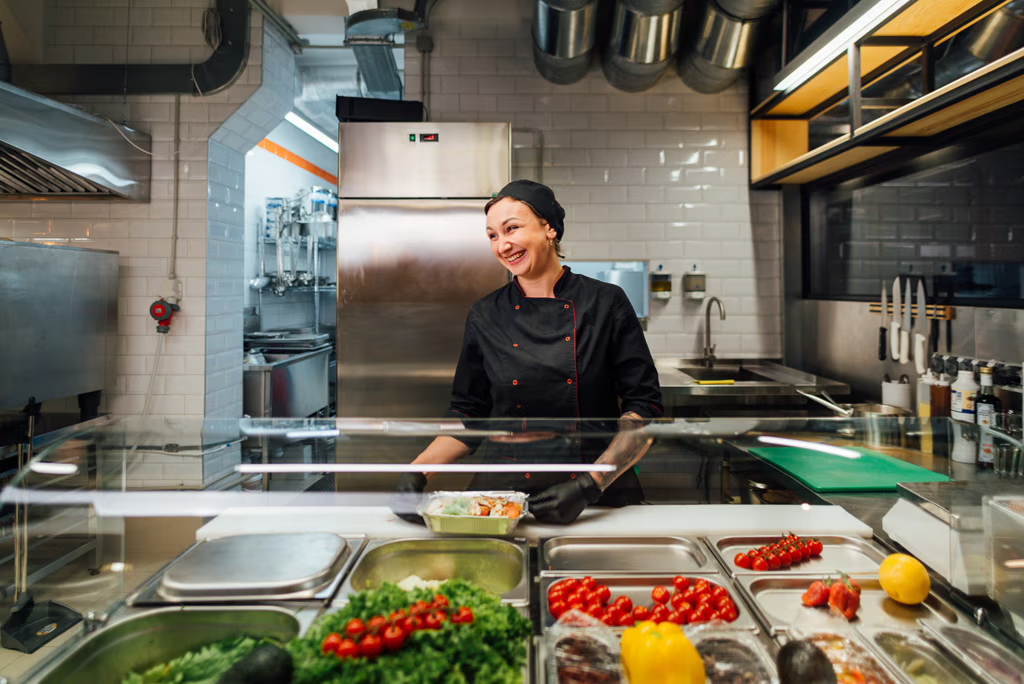
For me, innovation in catering is about progress, not novelty. It’s easy to chase trends, but real innovation solves problems for customers and improves how food performs in a live environment. That might mean improving nutritional balance, reducing carbon impact, speeding up service, or making food more accessible to different audiences.

True catering innovation balances creativity with consistency. If an idea can’t be delivered at scale, or doesn’t resonate with customers, then it isn’t innovation – it’s just experimentation.
Where does innovation start at Angel Hill Food Co.?

Chris Ince:

It always starts with listening. We listen to our customers, our site teams and our chefs. They are closest to the reality of service – they know what customers ask for, what sells, and what causes friction.

From there, ideas are developed collaboratively. We test concepts in real kitchens, refine them based on feedback, and pressure-test them operationally. That process ensures we innovate catering in a way that works day in, day out – not just on paper.

How do you balance creativity with operational delivery at scale?

Chris Ince:

That’s one of the biggest challenges in food service. You can create the most exciting dish in the world, but if it slows service, requires specialist skills, or creates waste, it won’t succeed in a workplace setting.

Our approach to catering innovation is rooted in practicality. We look at ingredient availability, preparation time, training requirements and equipment from the outset. Creativity has to live within those parameters – and often that’s where the best ideas emerge.

Innovation is often associated with new flavours – but is that enough to deliver real progress in catering?

Chris Ince:

Flavours are important, but innovation goes far beyond that. Some of the most impactful changes happens quietly – reformulating recipes, improving sourcing, or redesigning formats to suit how people actually eat at work.

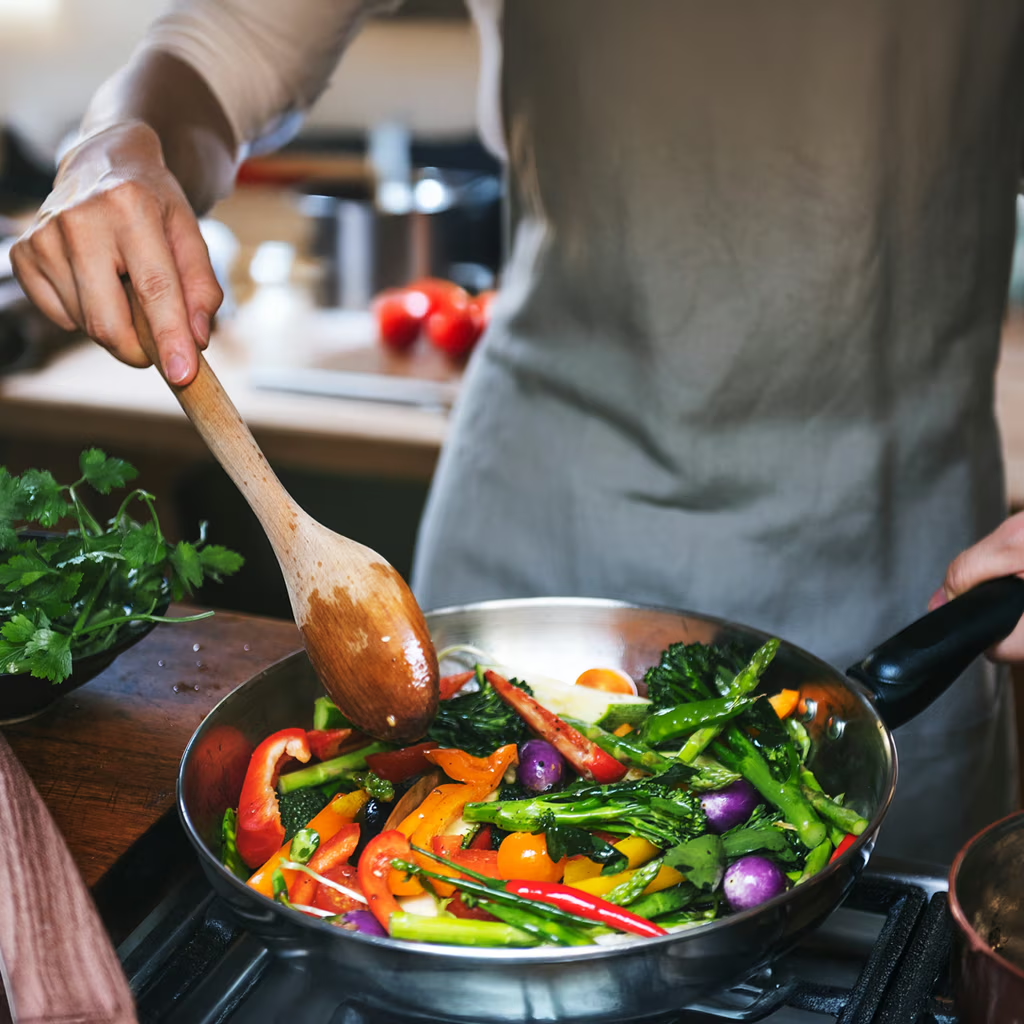
For example, improving a familiar dish by lowering its carbon footprint or enhancing its nutritional profile without changing the eating experience is a powerful way to innovate catering. Customers still get what they love, but with added value behind the scenes.

How does sustainability influence catering innovation across modern food service?

Chris Ince:

Sustainability is inseparable from innovation now. Any new concept or recipe has to be assessed through environmental, nutritional and commercial lenses. Our Big Carbon Kick Out programme is a great example – it challenges us to rethink everyday dishes and make smarter ingredient choices that reduce impact without sacrificing flavour.

This isn’t about telling customers what they should eat. It’s about making better choices the default, so sustainability becomes effortless.

How do you encourage chefs to innovate?

Chris Ince:

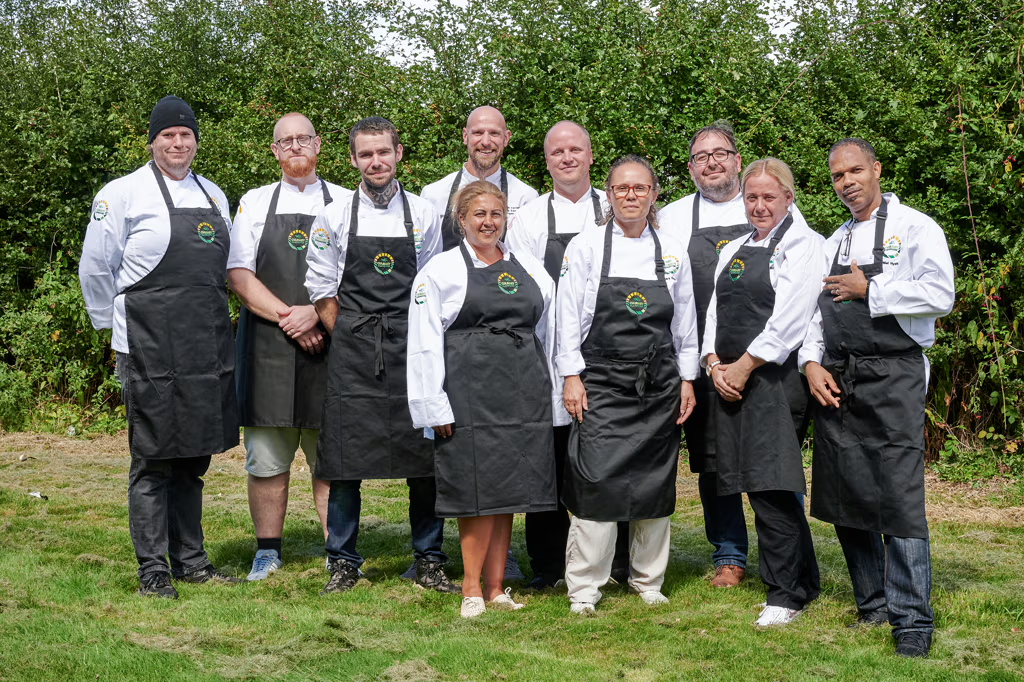
Culture is everything. Chefs need structure, but they also need trust. We give our teams clear frameworks and objectives, then empower them to explore ideas within those boundaries.

Initiatives like our Culinary Classroom bring chefs together to share knowledge, test concepts and learn from one another. When people feel invested and heard, innovation becomes part of everyday thinking – not something reserved for special projects.
What role does customer insight play in innovation?

Chris Ince:

A huge one. Innovation only succeeds if customers buy into it. That’s why we involve them early – through tastings, trials and feedback loops.

When customers help shape the outcome, adoption is faster and confidence is higher. That’s how we innovate catering with relevance, rather than assumption.

Looking ahead, what excites you most about the future of catering innovation?

Chris Ince:

The opportunity to rethink formats and experiences. As workplaces evolve, food needs to work harder – it has to be flexible, engaging and meaningful.

Whether it’s street-food-inspired concepts, smarter grab-and-go options, or reimagined classics, the future of catering innovation lies in blending creativity with insight. If we stay curious, collaborative and grounded in reality, there’s enormous potential ahead.

A Considered Approach to Innovating Catering

Innovation is not about reinvention for its own sake. It’s about thoughtful progress – improving how food tastes, how it’s delivered, and how it supports people and the planet.

By embedding catering innovation into everyday thinking and continuing to innovate catering through collaboration and insight, Angel Hill Food Co. is shaping a future where workplace food is not just served – it’s genuinely valued.
Angel Hill Food Co. Launches Revolutionary Sustainable Hybrid Burger

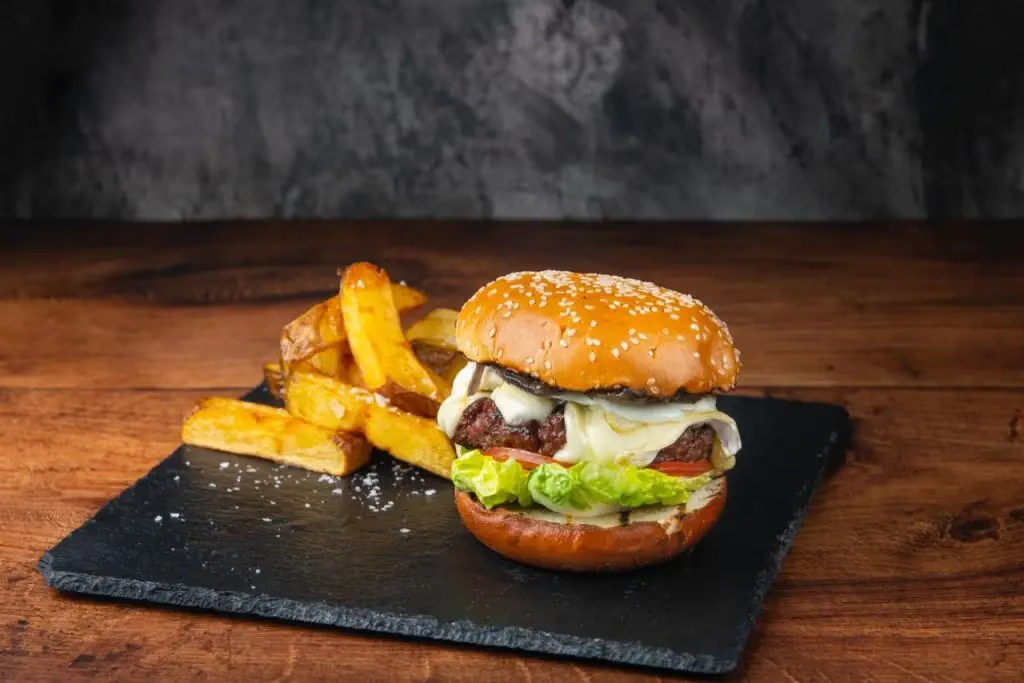
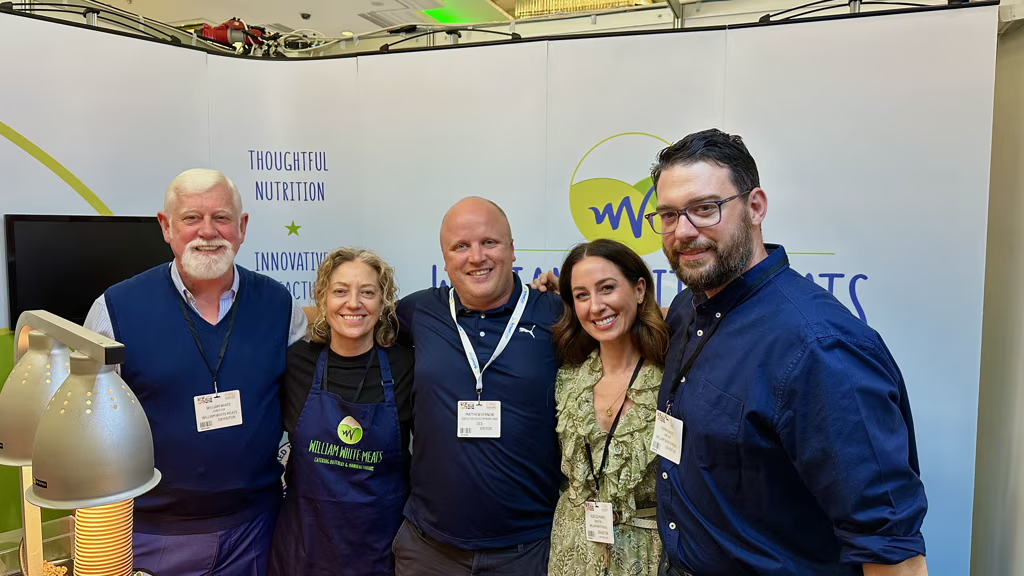
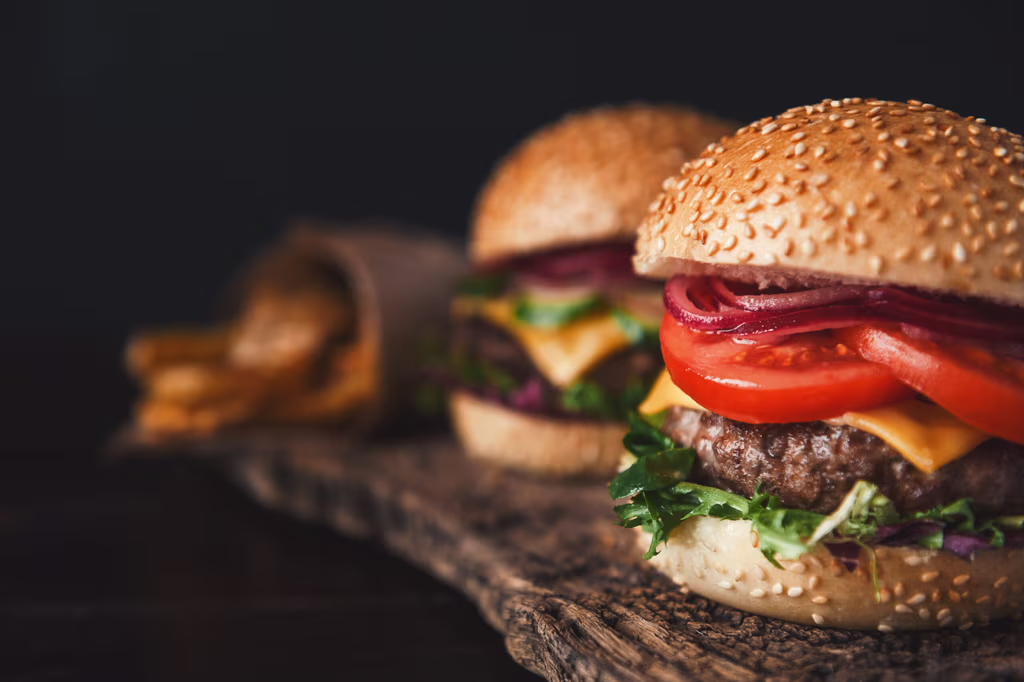
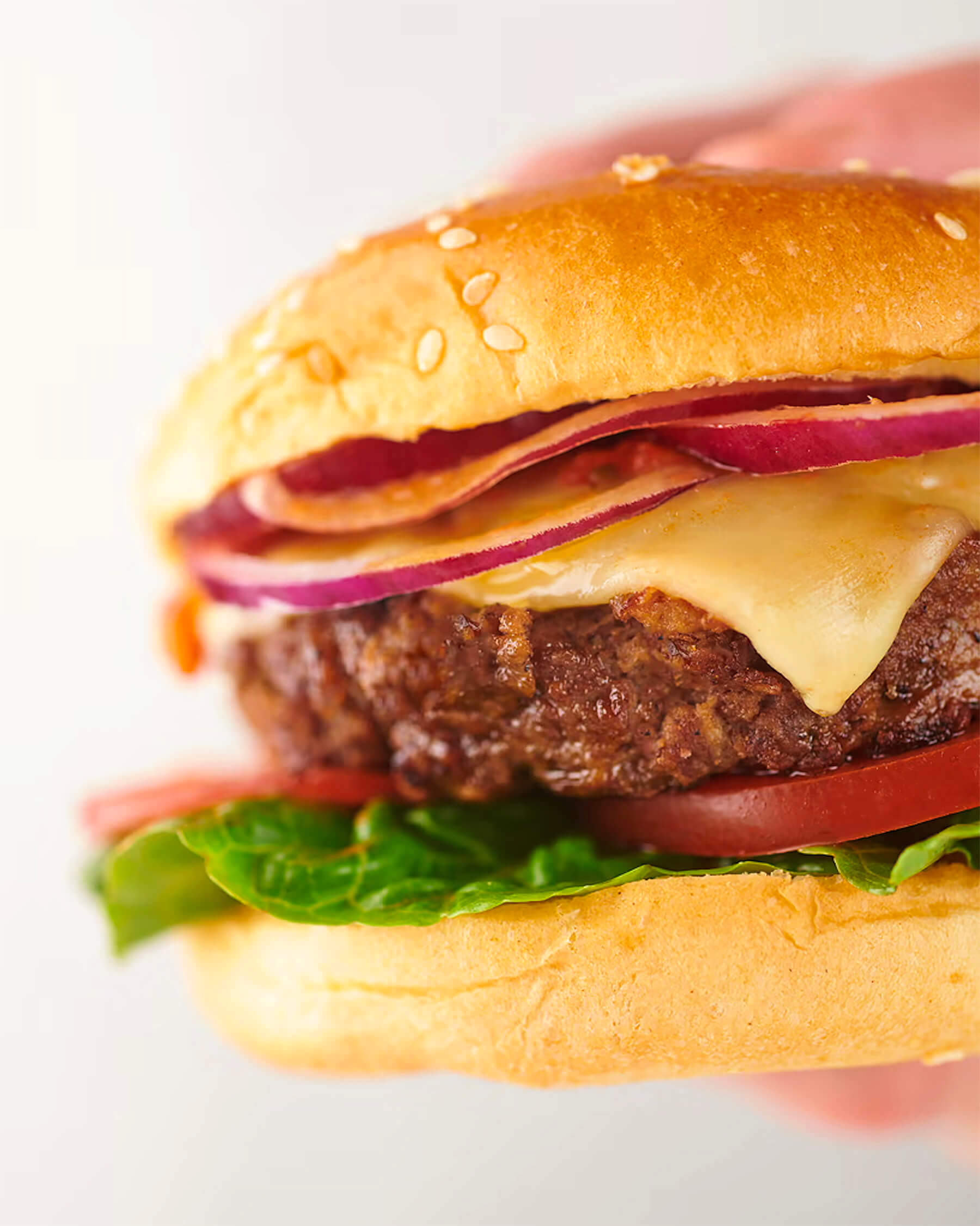
Angel Hill Food Co. is proud to introduce a groundbreaking hybrid sustainable burger created in partnership with flavour innovators Eat Curious and heritage butchers William White Meats Ltd.

This innovative burger combines Eat Curious’ plant-based textured vegetable protein with high-quality British beef, delivering a nutritious, sustainable and delicious option for customers in the Business, Industry and Education sectors.

Why this burger matters

Developed through our Culinary Classroom chef programme and driven by consumer insight, this burger is designed to meet both flavour expectations and sustainability goals.

Switching to this hybrid burger across all our sites is expected to save the carbon equivalent of one million car miles each year, proving it’s more than just a menu change, it’s a step towards real environmental impact.

Nutritional and environmental benefits

Every burger offers:

  • 16g protein per 100g for a satisfying meal

  • Just 3.6g saturated fat for heart health

  • 2g fibre to support gut health

  • 1.66kg CO₂e reduction per portion

  • 100% allergen free

By blending plant-based protein with beef, this burger is higher in protein, lower in saturated fat, and more environmentally responsible, without sacrificing taste.

A bold move for a better burger

We’ve gone all in – this is now the only burger we serve across our sites.

We’re evolving the burger by combining the best of both worlds, plant-based innovation and traditional butchery, to deliver a burger that’s better for people and the planet.

– Matt Vernon, Executive Development Chef, Angel Hill Food Co.

This burger is a brilliant example of how we can innovate without compromise. It’s a smarter, more balanced choice and a big step forward in how we nourish our customers.

– Amy Teichman, Head of Nutrition, Angel Hill Food Co.

Partnering for change

Our partnerships with Eat Curious and William White Meats Ltd made this innovation possible:

By combining our Eat Curious mince with high-quality beef, we’ve created a burger that delivers on taste, sustainability and future-focused eating.

– Resh Diu, CEO, Eat Curious

As a family-run butcher, this partnership allows us to stay true to our values while embracing innovation. It’s a new way to enjoy great British meat responsibly.

– Thomas White, Director, William White Meats Ltd

Customer feedback from trials

The burger has been tried and loved in schools, workplaces and catering sites:

  • Ocado – Trident Place: “The taste is spot on. You’d never guess it’s part plant-based. Great for sustainability goals.”

  • Marshalls Park School: “Packed with protein, lower in saturated fat, and still something students are excited to eat.”

  • Winterbourne Academy: “A standout product that meets the demands of both sustainability and taste.”

Coming to education sites this autumn

From the new school year, our hybrid burger will be available across Angel Hill Food Co. education sites, giving students a nutritious, high-protein, planet-friendly lunch option.

Bring the hybrid burger to your site

Want to serve delicious, sustainable meals that your customers will love? Contact the Angel Hill Food Co. team today to find out how to bring our hybrid burger to your menu.

Sustainable Catering: Cutting Carbon Without Losing Flavour

Reducing carbon emissions in food production and catering services is now a top priority for the hospitality and foodservice sector. From minimising waste to sourcing local, seasonal ingredients and rethinking supply chains, every step counts towards lowering our environmental footprint. The challenge is ensuring these sustainability efforts never compromise taste or customer satisfaction.

Smarter Ingredient Choices

Reimagining menu development is key to creating delicious, high-quality meals while reducing carbon intensity. By tracking the carbon footprint of recipes, chefs can identify high-impact ingredients and explore swaps that optimise sustainability. Plant-based proteins, locally sourced produce, and optimised cooking methods all play a role in lowering emissions without sacrificing flavour. Collaboration between chefs, nutritionists, and suppliers ensures these changes are practical and successful.

Meeting Customer Expectations

Sustainability is now a deciding factor for clients and consumers. Organisations increasingly seek catering partners who combine environmental responsibility with innovation and great taste. Carbon tracking tools can measure progress, while transparent reporting on sourcing, waste reduction, and emissions builds trust. Beyond data, interactive tastings and customer engagement bring sustainable dining to life, proving it can be both impactful and enjoyable.

Balancing Sustainability and Cost

Contrary to popular belief, sustainability in catering does not have to mean higher costs. Many savings come from reducing food waste, optimising portion sizes, and adopting energy-efficient cooking methods. Plant-based proteins such as pea protein retain their weight during cooking, reducing waste and providing an affordable, flavourful alternative to meat. Seasonal, locally grown produce not only cuts transport-related emissions but can also lower purchasing costs, making it ideal for budget-conscious sectors like education.

Strategies for a Low-Carbon Kitchen

Catering teams can take targeted action by reviewing the sourcing of ingredients in popular dishes and addressing carbon hotspots. Improving well-loved menu favourites can have a greater long-term impact than focusing solely on a few low-carbon options. Transitioning to a low-carbon catering model is about progress, not compromise. With the whole team aligned on the mission, small, consistent changes can deliver significant environmental benefits without losing the joy of great food.

Get in touch today to find out how our catering services can help your organisation cut carbon without compromising on flavour.

AI in Contract Catering: Driving Efficiency, Reducing Waste, and Enhancing Menus

Modern catering goes far beyond simply serving meals. Today’s chefs and catering teams must operate across diverse environments while ensuring that healthy, high-quality food is delivered safely, efficiently, and with minimal environmental impact. Customers increasingly expect locally sourced produce, and there is growing scrutiny of the sector’s carbon footprint. Artificial Intelligence (AI) has emerged as a powerful tool to meet these challenges, offering data-driven insights that support real-time decision-making and operational agility.

Smarter Demand Forecasting for Less Waste

One of AI’s most impactful applications in catering is demand forecasting. By analysing historical data and predicting footfall and meal uptake, AI algorithms can accurately anticipate daily customer needs.

This insight allows catering teams to reduce food waste by aligning production with real-time demand. According to the Waste and Resources Action Programme, food waste from the UK’s hospitality and foodservice sector costs an estimated £3.2 billion annually. AI-driven demand forecasting can directly reduce waste at the source, preventing uneaten meals from ending up in the bin.

Smart Menu Planning to Meet Diverse Needs

AI is also transforming menu development. Smart menu planning tools use AI to create tailored options based on dietary requirements, ingredient availability, and customer preferences. This technology is particularly valuable in environments such as schools, universities, and healthcare facilities, where meeting specific nutritional guidelines is essential.

By optimising menus in this way, catering teams can ensure variety, quality, and compliance without increasing costs or compromising taste.

Operational Efficiency Through AI-Driven Scheduling

AI is also revolutionising staff scheduling. Catering operations often run on tight timelines and with limited staff, making efficiency crucial. AI-powered scheduling tools optimise staff rotas based on peak service times, shift preferences, and operational demands.

This ensures the right people are in the right place at the right time, improving productivity and reducing administrative workloads. In high-volume catering settings, such as corporate offices or university cafeterias, these efficiencies can significantly enhance service delivery.

Hydroponics

The Future of AI in Catering

AI is proving to be a valuable asset for contract catering, helping businesses to cut waste, streamline operations, and create menus that balance taste, nutrition, and sustainability. As the technology continues to evolve, it offers the catering sector the ability to deliver exceptional dining experiences while meeting the growing demands for efficiency and environmental responsibility.

Contact us today to learn how our catering services use AI to improve performance and sustainability.

Championing Healthy Eating Through Veg Power Campaign

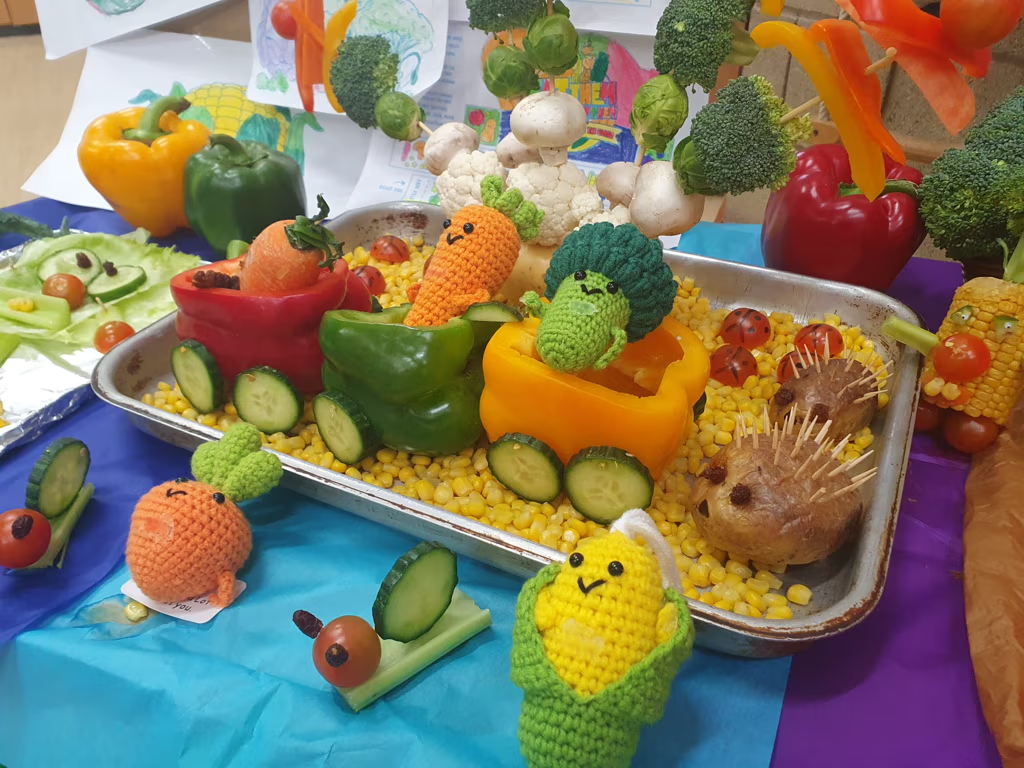
In March, more than 10,000 primary school pupils joined the national Eat Them To Defeat Them initiative, an award-winning Veg Power campaign aimed at boosting children’s vegetable intake in a fun and engaging way. Spanning 36 schools from Southend-on-Sea to Huddersfield, the campaign gave Angel Hill Food Co. an opportunity to promote healthy eating habits among young learners and inspire a lasting love for vegetables.

Why Vegetables Are Vital for Growing Children

Vegetables are packed with essential vitamins, minerals, and fibre that support children’s growth, strengthen immune systems, and reduce the risk of chronic illnesses later in life. Yet 80% of UK primary school children are not eating enough vegetables.

As a leading education catering provider, Angel Hill Food Co. is committed to changing this by making vegetables appealing, accessible, and part of everyday meals.

Partnering with Veg Power for Positive Change

To support the seventh year of the Eat Them To Defeat Them campaign, Angel Hill Food Co. partnered with Veg Power, a not-for-profit organisation dedicated to improving children’s diets.

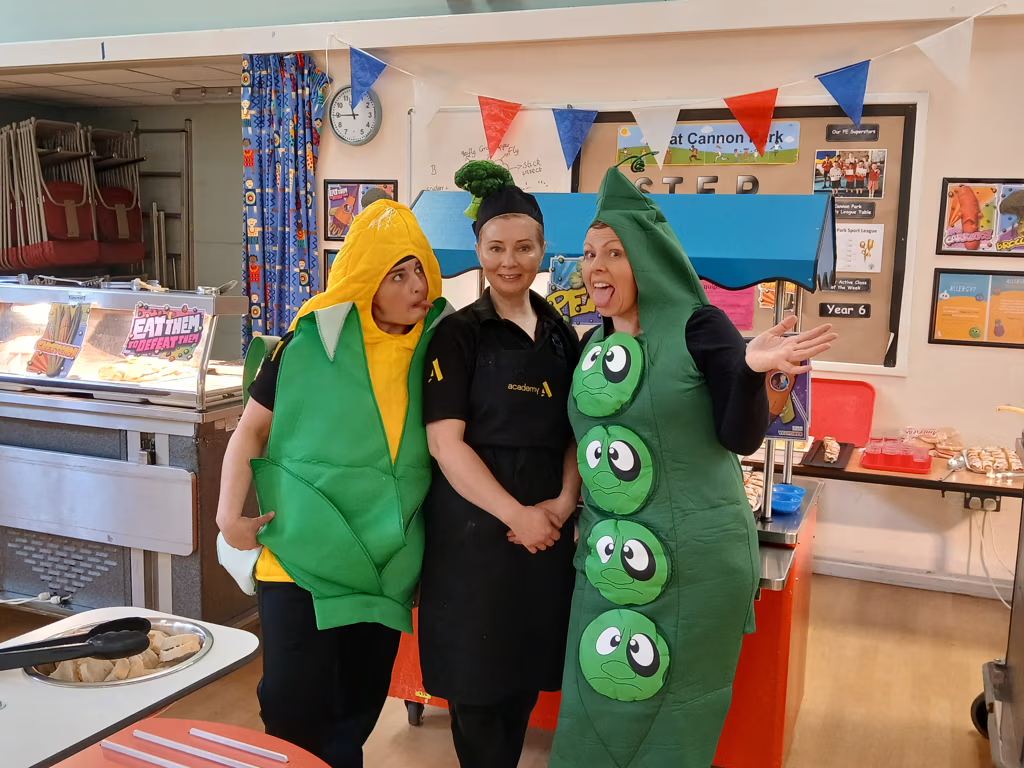
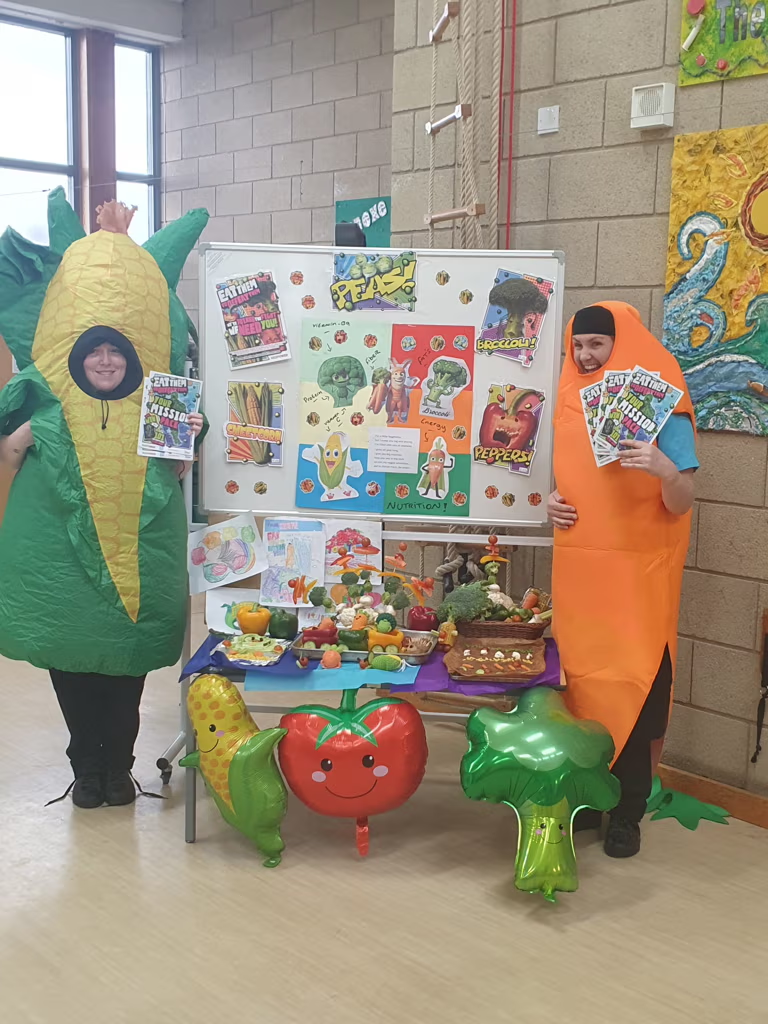
We provided participating schools with campaign packs, including posters, stickers, activity sheets, and take-home materials, as well as hosting online training sessions to help school teams get involved. Our catering teams brought the campaign to life through tasting workshops, vibrant displays, and even dressing up as vegetables to capture pupils’ imaginations.

The official focus week began on 10 March, but many schools continued activities beyond that date. At one school in Shrewsbury, Veg Power representatives hosted a special assembly and filmed the event for national promotion. Sweetcorn topped the popularity list among pupils, closely followed by carrots.

Celebrating Creativity and Impact

Several of our schools also entered the Veg Power Caterers Challenge, which recognises the most innovative campaign efforts with prizes of up to £500. After last year’s success, when Redhill Primary earned a Silver Award, we are hopeful for more recognition this year.

Feedback from our teams highlighted the positive reception:

The children truly embraced the challenge, and we’re excited to keep the momentum going.

– Karen Hodson, Operations Manager

Many children tried vegetables for the first time, and we’re looking forward to more initiatives like this.

– Kate Venables, Chef Manager

Continuing the Momentum for a Healthier Future

Although the campaign has ended, Angel Hill Food Co. remains dedicated to encouraging children to eat more vegetables. Through initiatives like Junior Chef’s Club and Lunchathon, we aim to inspire lifelong healthy eating habits and provide fun, educational food experiences.

By working alongside Veg Power, we are helping to shape a healthier future, one vegetable at a time.

Get in touch with our team to learn more about our education catering services and how we can support your school.

Advocating for Healthy School Meals at Westminster

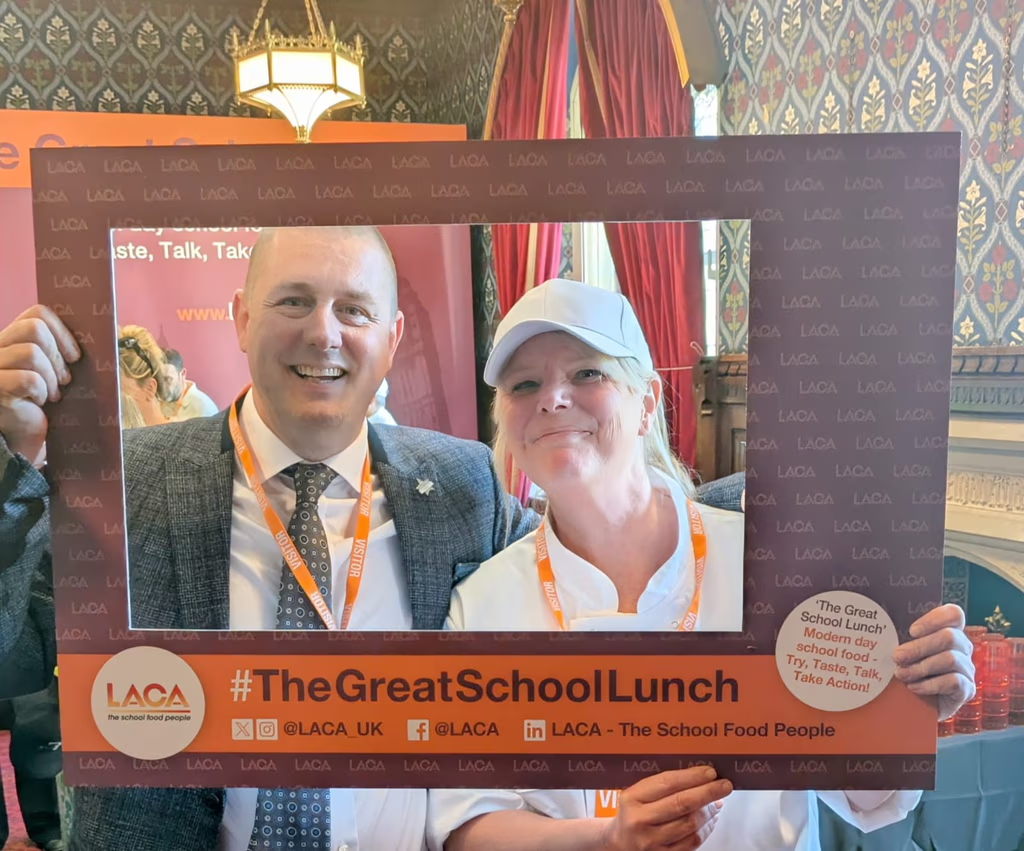
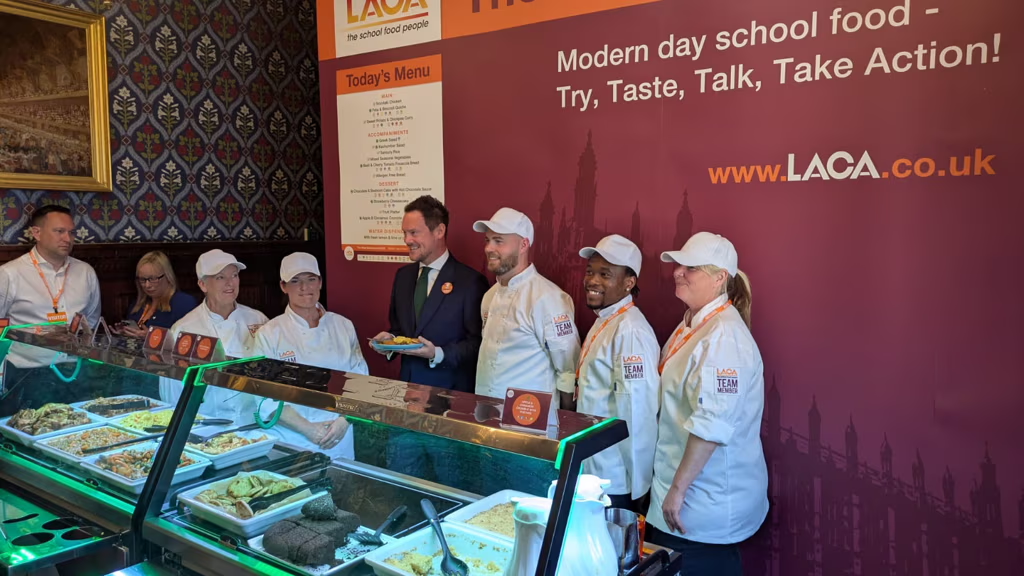
Angel Hill Food Co. proudly joined LACA’s Great School Lunch event at the House of Commons on 29 April 2025, reinforcing its commitment to healthy, high-quality school meals. Representing the company were Jennifer Brown, Catering Manager, and Rob Cass, Operations Manager, who showcased the passion, innovation, and care that go into every meal served to pupils across the UK.

Supporting the Call for Increased Free School Meals Funding

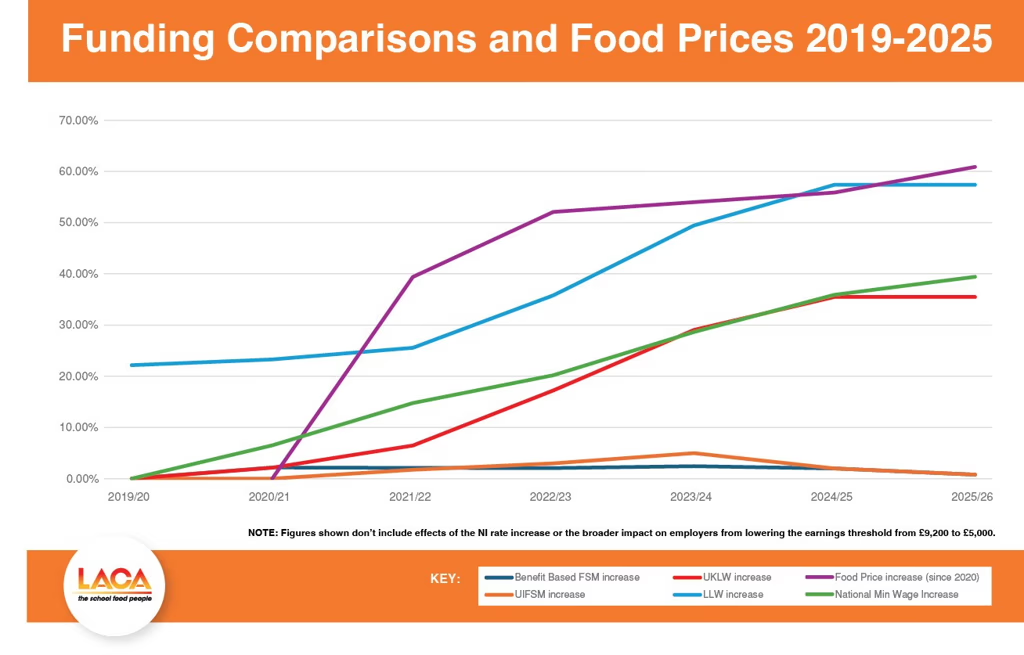
The event formed part of LACA’s national campaign to raise the Free School Meals allowance in England to £3.16 per meal. This funding increase would help schools and families during the cost-of-living crisis, ensuring children continue to receive nutritious, hot meals.

Rob and Jennifer joined catering and education leaders to highlight the importance of nutritious food for every child and to address the challenges schools face — from rising food prices and limited budgets to maintaining high nutritional standards.

Award-Winning School Chef Displays Excellence

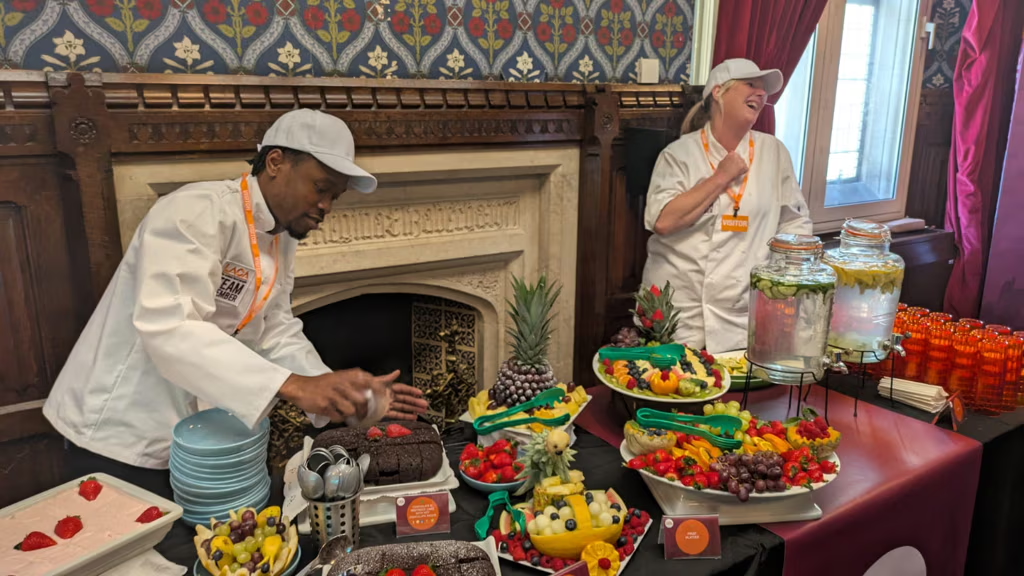
Jennifer Brown, LACA’s 2024 School Chef of the Year, prepared and served lunch to Members of Parliament, offering a first-hand taste of the balanced and appealing meals served in schools nationwide.

Menu highlights included:

  • Mains: Souvlaki chicken, feta & broccoli quiche, sweet potato & chickpea curry

  • Sides: Greek salad, kachumber salad, savoury rice, seasonal vegetables, focaccia

  • Desserts: Chocolate & beetroot cake with hot sauce, strawberry cheesecake, fresh fruit, apple & cinnamon crumble with custard

Jennifer’s participation demonstrated the expertise, creativity, and dedication behind every school meal served by Angel Hill Food Co.

Championing the Future of School Catering

Angel Hill Food Co., part of the OCS Group, supports LACA’s mission to ensure healthy, accessible meals for all pupils. The event also provided Rob Cass, LACA Southwest Vice Chair, with an opportunity to engage MPs on the vital role of school catering teams and the pressing need for better funding.

The presence of Angel Hill at Westminster underscored its leadership in education catering – balancing quality, sustainability, and value – and its commitment to shaping a healthier future for children.

Great Coffee, Greater Impact: How Angel Hill Food Co. Turns Everyday Choices into Positive Change

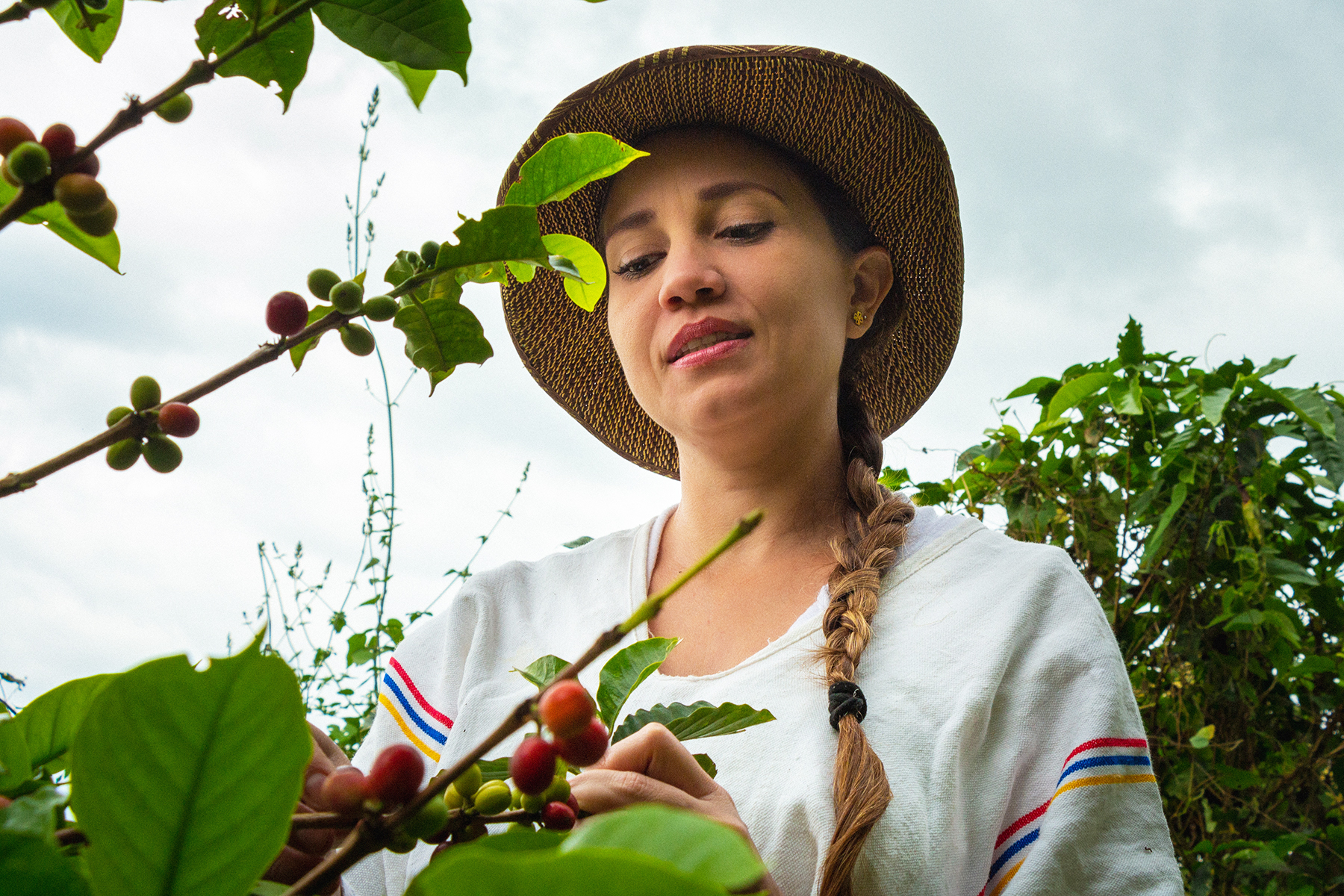
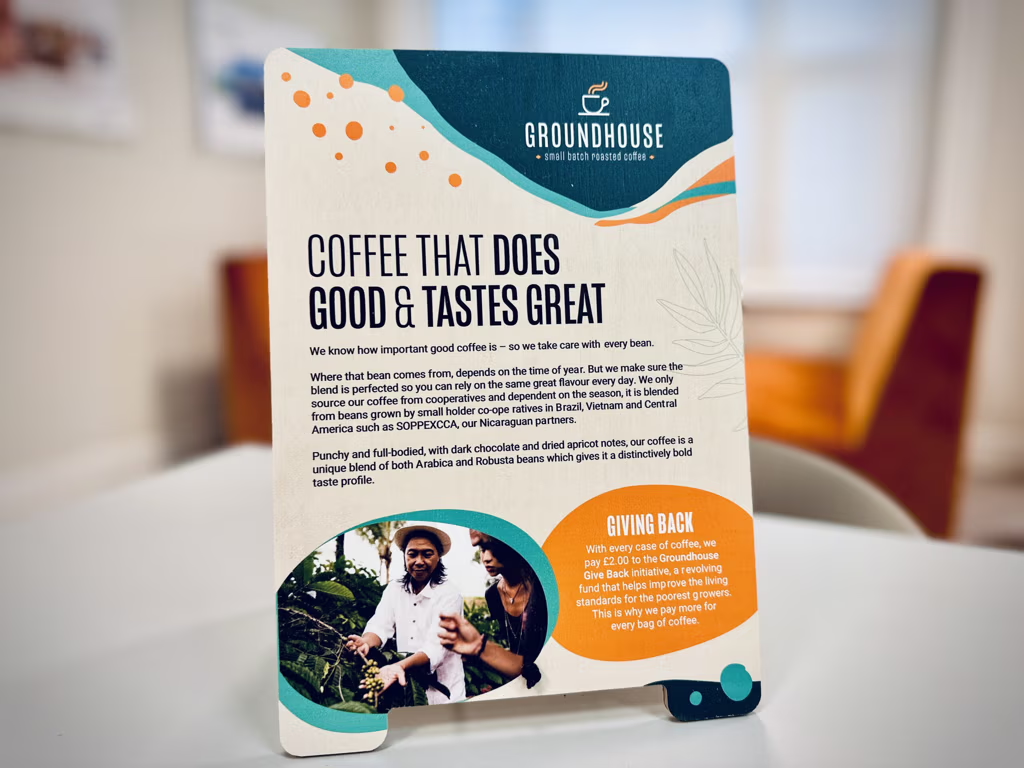
Great food and drink have always been about more than taste alone. They’re about people, purpose and the impact small, everyday choices can have when they’re made with care. That belief is perfectly reflected in the success of Groundhouse Coffee – a coffee brand that proves doing good can start with something as simple as the morning cup.

Over the past year, Groundhouse Coffee has helped raise more than £10,000 for charitable causes, demonstrating how Angel Hill Food Co. continues to weave social value into the fabric of its food and beverage offer. It’s a powerful reminder that when food is thoughtfully sourced and purposefully served, it can create meaningful change far beyond the counter.

Coffee with a conscience

Groundhouse Coffee was developed as part of Angel Hill Food Co.’s commitment to offering products that align with modern expectations — quality, sustainability and responsibility working hand in hand. From ethically sourced beans to a supply chain designed with transparency in mind, Groundhouse represents a conscious approach to coffee that doesn’t compromise on flavour or experience.

Every cup served across Angel Hill Food Co. sites contributes to wider charitable efforts, turning daily rituals into opportunities for positive impact. Rather than relying on one-off fundraising initiatives, the Groundhouse model embeds giving directly into everyday consumption – ensuring that impact is continuous, not occasional.

As Henry Watts, Managing Director at Angel Hill Food Co., explains:

Groundhouse Coffee shows how everyday choices can make a real difference. By building purpose into a product people enjoy daily, we’re able to create meaningful social impact without asking customers to change their behaviour — just enjoy great coffee.

That philosophy sits at the heart of the Groundhouse approach: doing good shouldn’t feel complicated, forced or separate from the food experience.

Small moments, collective impact

The £10,000 raised through Groundhouse Coffee didn’t come from a single campaign or event. It came from thousands of individual decisions – people choosing a coffee during a break, between meetings or at the start of their day. Collectively, those moments added up to something far more powerful.

For Angel Hill Food Co., that collective impact is central to the brand’s philosophy. Food and drink are touchpoints that connect people throughout the day, and when those touchpoints are designed with purpose, they become vehicles for change.

By embedding charitable giving into a core product, Angel Hill Food Co. ensures that doing good is effortless for customers. There’s no additional action required – just a great cup of coffee that happens to give back.

Supporting communities through food

Social value is not an add-on for Angel Hill Food Co.; it’s an integral part of how the business operates. Groundhouse Coffee sits alongside wider initiatives focused on sustainability, nutrition and community support, reinforcing a holistic approach to responsible catering.

The funds raised through Groundhouse have supported causes aligned with Angel Hill Food Co.’s values, helping communities and individuals in meaningful ways. While the coffee itself is the visible product, the real impact is felt in the lives supported behind the scenes.

This aligns closely with the wider mission of Angel Hill Food Co. – to deliver food that not only tastes good, but does good too. Whether through reducing environmental impact, supporting local suppliers or embedding charitable contributions into everyday menus, the focus remains on long-term, meaningful outcomes.

Purpose built into the plate – and the cup

What makes Groundhouse Coffee particularly powerful is its simplicity. There’s no grand gesture or complicated mechanism. Instead, it reflects a belief that purpose works best when it’s seamlessly integrated into everyday life.

For Angel Hill Food Co., this is the future of workplace catering – where quality, convenience and conscience coexist naturally. Customers don’t have to choose between enjoying great food and supporting positive change; they can do both, effortlessly.

As Groundhouse Coffee continues to grow across Angel Hill Food Co. locations, its impact will grow with it – one cup at a time. And while £10,000 is a significant milestone, it’s also just the beginning.

Because at Angel Hill Food Co., every choice matters – and even the smallest moments can help create a better, more sustainable future.

Angel Hill Food Co. Inspires Southwark’s Young Food Tech Students with Sushi Masterclass

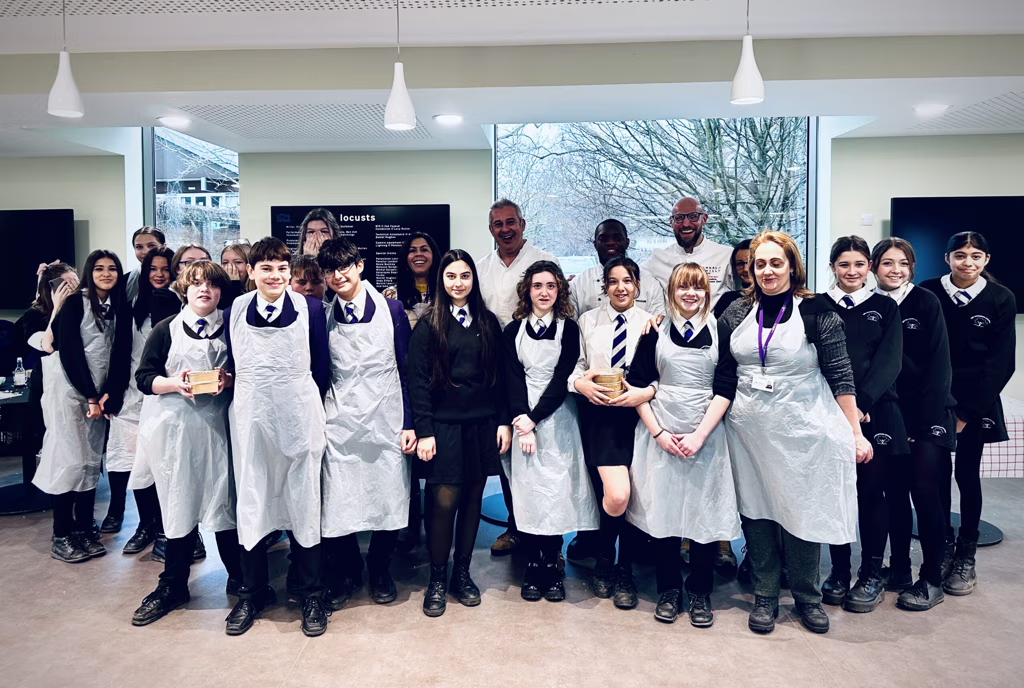
Bringing real industry experience into the classroom can be transformative – building confidence, sparking ambition and opening doors to future careers. That was exactly the aim when Angel Hill Food Co. spent time with food technology students in Southwark, delivering a hands-on session designed to inspire the next generation of food talent.

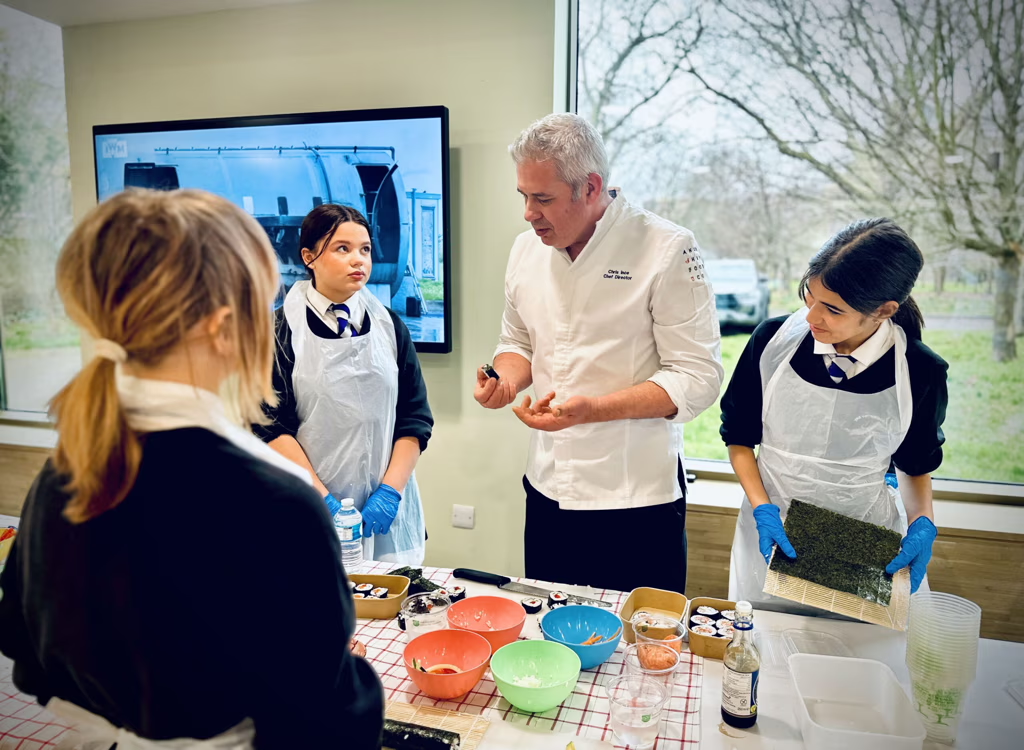
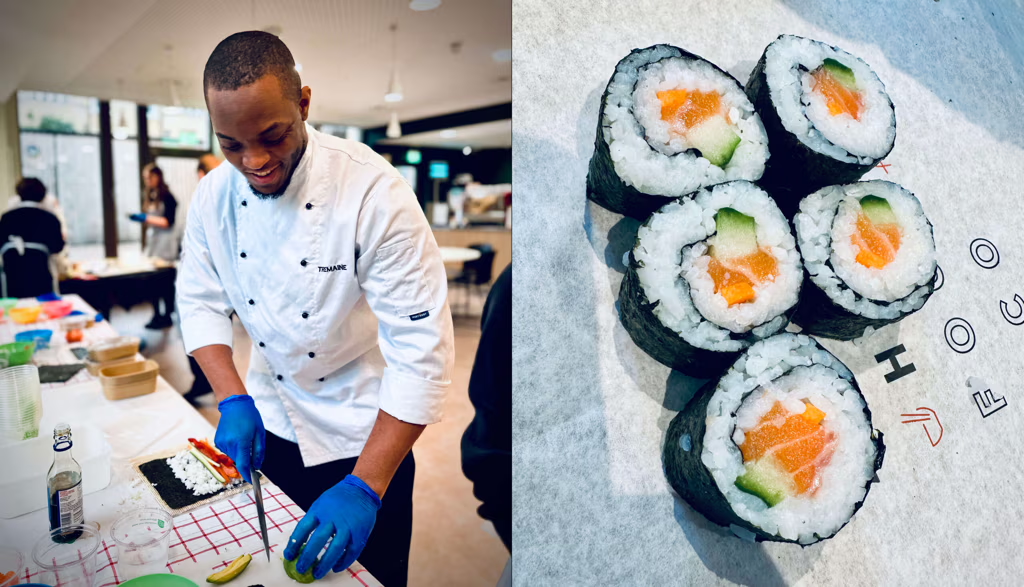
The visit saw Angel Hill Food Co.’s culinary leaders step out of the kitchen and into the classroom, sharing practical skills, career insight and personal stories to show students what a future in food can look like. The session was led by Chris Ince, Chef Director, alongside Executive Development Chef Dan Farrand and Commis Chef Tremaine Gibson, creating a powerful blend of leadership, mentorship and lived experience.

Learning through craft and culture

At the heart of the session was a sushi masterclass, introducing students to the precision, discipline and respect for ingredients that underpin Japanese cuisine. From preparing rice correctly to mastering knife skills and rolling techniques, the chefs guided students through each stage, emphasising that great food is built on patience, care and consistency.

As the class progressed, the chefs shared their own culinary journeys, helping students understand that there is no single route into the profession – only a need for curiosity, commitment and a willingness to learn.

Reflecting on the importance of experiences like this, Chris Ince, Chef Director at Angel Hill Food Co., said:

Food education is about much more than learning recipes. It’s about building confidence, showing young people what’s possible, and helping them understand that food can be a creative, rewarding and meaningful career. If we can inspire even one student to believe in themselves, then sessions like this are incredibly worthwhile.

His message reinforced the idea that food education has the power to shape futures, not just skills.

Real stories that resonate

For Commis Chef Tremaine Gibson, the session was particularly personal. Having progressed through the industry himself, Tremaine shared his own journey – from early training to becoming a valued member of Angel Hill Food Co.’s award-winning NHS catering teams.

“I see a lot of myself in these students,” Tremaine explained. “When I was younger, having chefs believe in me made all the difference. Today was about giving that encouragement back and showing them that hard work and passion really can take you far.”

His honesty and relatability struck a chord with the students, turning the class into a genuine moment of connection rather than a one-way demonstration.

Opening doors to future careers

Beyond technique, the session focused on opportunity. Students were encouraged to ask questions about life in professional kitchens, different career paths within food, and the range of roles available beyond cooking alone. From development chefs to food technologists and operational leaders, the discussion highlighted just how broad the industry can be.

Angel Hill Food Co. sees engagement with schools as a vital part of supporting education and nurturing future talent. By giving young people access to real professionals and real stories, the business helps demystify the industry and show that food careers are accessible, diverse and full of potential.

Executive Development Chef Dan Farrand praised the students’ enthusiasm and curiosity, noting how quickly they absorbed new techniques and engaged with the chefs throughout the session.

Inspiring the next generation

The Southwark masterclass is one example of how Angel Hill Food Co. continues to invest in people – not just through menus, but through meaningful community engagement. By sharing knowledge, experience and encouragement, its chefs are helping young people build confidence, develop practical skills and imagine futures they may not have considered before.

For the students, it was a chance to learn something new and see food through a different lens. For Angel Hill Food Co., it was another opportunity to demonstrate that food has the power to connect, inspire and create lasting impact – far beyond the kitchen.

Big Carbon Kick Out: A Conversation with Matt Vernon

As pressure mounts on the food and hospitality sector to reduce environmental impact, the role of catering has never been more critical. Food sits at the intersection of sustainability, nutrition and human behaviour – and change at scale can only happen if solutions are practical, appealing and commercially viable.

Big Carbon Kick Out was created to address exactly that challenge. Rather than asking customers to change what they eat, the initiative focuses on rethinking how familiar, high-volume dishes are made – delivering meaningful carbon reduction without compromising on flavour, nutrition or experience.

We sat down with Matt Vernon, Executive Development Chef, to explore the thinking behind Big Carbon Kick Out, the data driving decisions, and why small changes applied consistently can deliver industry-level impact.

Matt, what problem was Big Carbon Kick Out designed to solve?

Matt Vernon:

We were seeing a real gap between sustainability ambition and what actually works in catering environments. There’s a lot of pressure to ‘do something green’, but often that results in niche menus or bolt-on initiatives that don’t scale.

Big Carbon Kick Out was designed to close that gap. Instead of asking customers to change their behaviour, we focused on changing the food itself – improving the dishes people already choose every day. That’s where scale, and therefore real impact, comes from.

Why was it important to focus on everyday dishes?

Matt Vernon:

Familiarity drives uptake. If you want carbon reduction to work at scale, you have to work with human behaviour, not against it.

When people recognise a dish and trust it, they order it without hesitation. That gives us an opportunity to reduce carbon quietly and consistently, without turning sustainability into a barrier or a ‘worthy choice’. The customer just experiences good food – and the impact happens in the background.

How did nutrition and data shape the development process?

Matt Vernon:

Nutrition was central from day one. We worked very closely with our nutrition team to ensure that any carbon reduction didn’t come at the expense of nutritional balance.

A lot of carbon impact sits in meat and dairy, so we focused on where those ingredients could be reduced or rebalanced responsibly. That doesn’t mean removing protein or satisfaction – it means rebuilding dishes intelligently using pulses, vegetables and technique to deliver the same experience in a lower-carbon way.

Can you share a clear example of the impact this approach delivers?

Matt Vernon:

Lasagna is one of the best examples because it’s a classic, high-volume dish. By reducing animal products by around 30% in our lasagna recipe, we saved approximately 162 kilos of carbon emissions per 100 portions.

To put that into perspective, that’s the equivalent of driving a petrol-powered car from London to Milan – from a single recipe change. When you apply that level of thinking across multiple everyday dishes, the cumulative impact becomes genuinely significant.

What has Big Carbon Kick Out achieved so far at scale?

Matt Vernon:

So far, we’ve served more than 3,000 Big Carbon Kick Out dishes, resulting in a saving of around 3,724 kg of CO₂e. That’s roughly the equivalent of driving over 9,500 miles in a petrol-powered car.

What’s important is that this impact hasn’t come from one big intervention. It’s come from lots of small, smart changes applied consistently. That’s the model we believe in – because it’s sustainable operationally as well as environmentally.

How are chefs responding to this way of working?

Matt Vernon:

Really positively. Big Carbon Kick Out respects the craft of cooking. It challenges chefs to think differently about ingredients and technique, but it doesn’t limit creativity or strip dishes back.

Once chefs see that customers still enjoy the food – sometimes even more – confidence grows quickly. It becomes something they feel proud of, not something they feel restricted by.

And how does this land with customers?

Matt Vernon:

That’s the real test – and it’s where the initiative has been most successful. Customers aren’t being asked to make a conscious ‘green choice’. They’re simply enjoying food that tastes great and feels familiar.

Sustainability becomes effortless. There’s no compromise, no lecture, no sense of loss – just better food with a lower footprint.

Looking ahead, what’s the next evolution of Big Carbon Kick Out?

Matt Vernon:

We’re continuing to expand the programme through new recipes, ingredient innovation and supplier partnerships. In some cases, we’re exploring ways to reduce animal products by up to 50%, while still delivering flavour, nutrition and satisfaction.

The ambition is for Big Carbon Kick Out to become a normal way of thinking about food – not a campaign, but a long-term framework for responsible, flavour-first catering.

From Initiative to Mindset

Big Carbon Kick Out demonstrates that carbon reduction in catering doesn’t have to be disruptive or restrictive. By focusing on everyday dishes, grounding decisions in nutrition and data, and empowering chefs to innovate within familiar formats, Angel Hill Food Co. is showing how sustainability can be embedded into daily operations – quietly, confidently and at scale.

For the wider catering industry, the message is clear: real change doesn’t always come from radical reinvention. Often, it comes from doing the basics better, more thoughtfully, and more consistently.

And when that happens, the impact speaks for itself.

Growing Sustainability: Angel Hill Food Co. Brings Hydroponic Farming into the Workplace

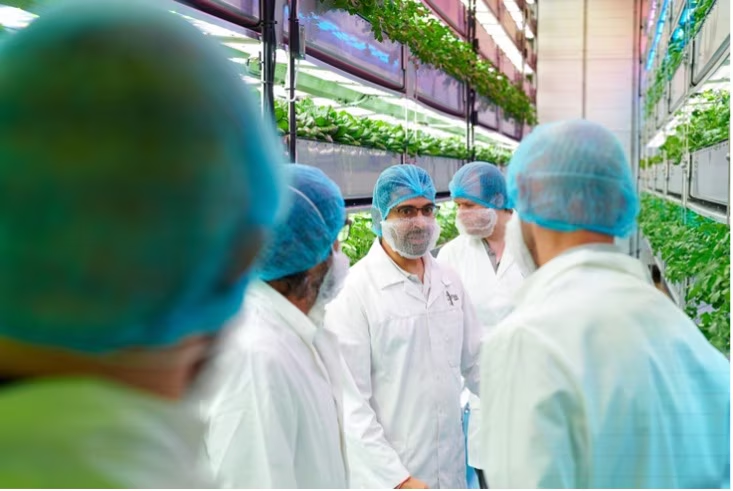
As the food service landscape evolves, so too does the way we think about where our ingredients come from and how they are grown. Angel Hill Food Co. is embracing this shift with an exciting innovation that brings Hydroponic Farming directly into workplace environments – blending sustainability, education and fresh flavour into everyday catering experiences.

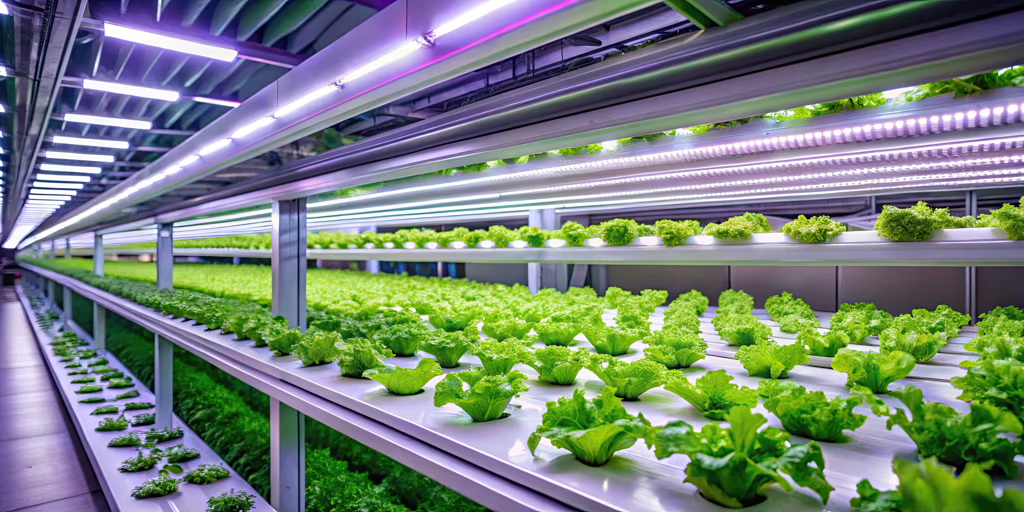
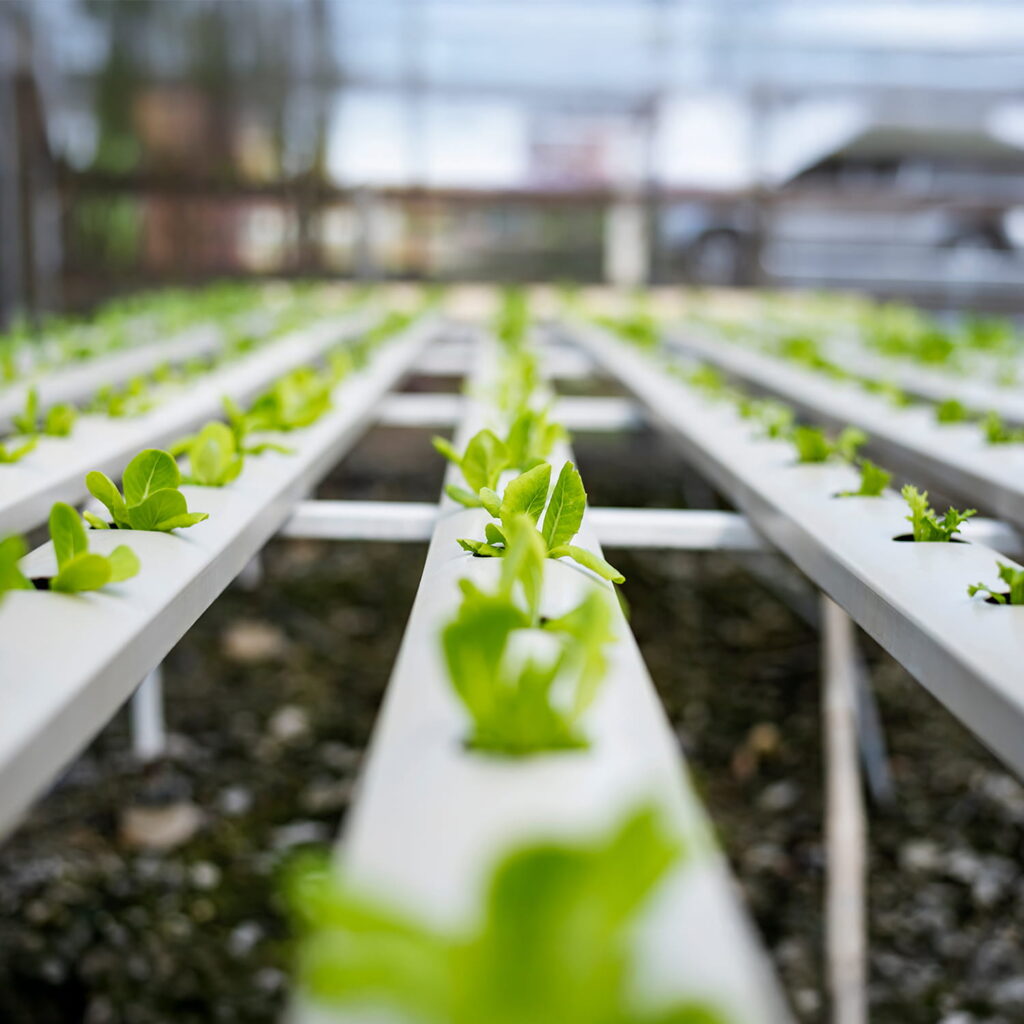
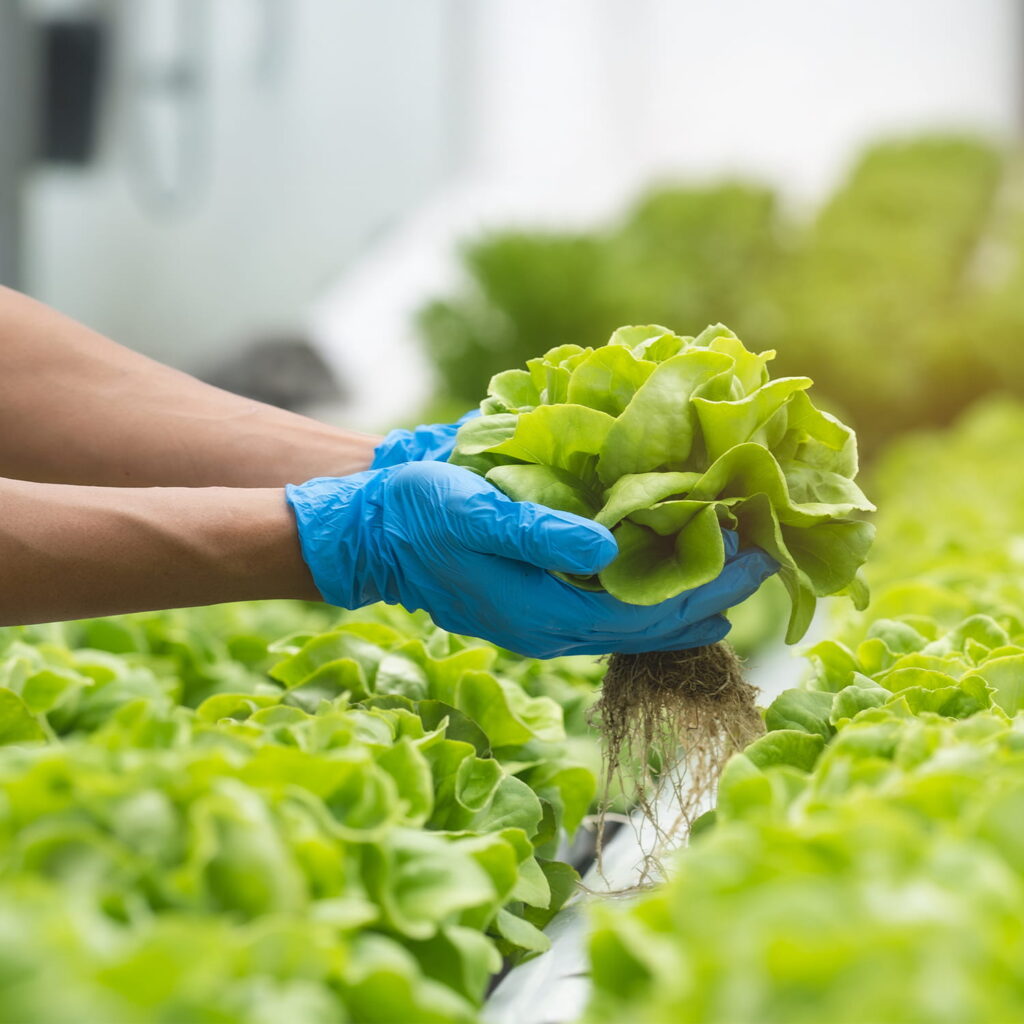
Hydroponic farming is a soilless cultivation method that allows plants to grow in a nutrient-rich water solution, using significantly less water and space than traditional agriculture. This controlled technique supports year-round production of fresh herbs and greens, making it an ideal fit for indoor environments such as offices, corporate sites and busy workplace hubs.

A New Kind of Workplace Garden

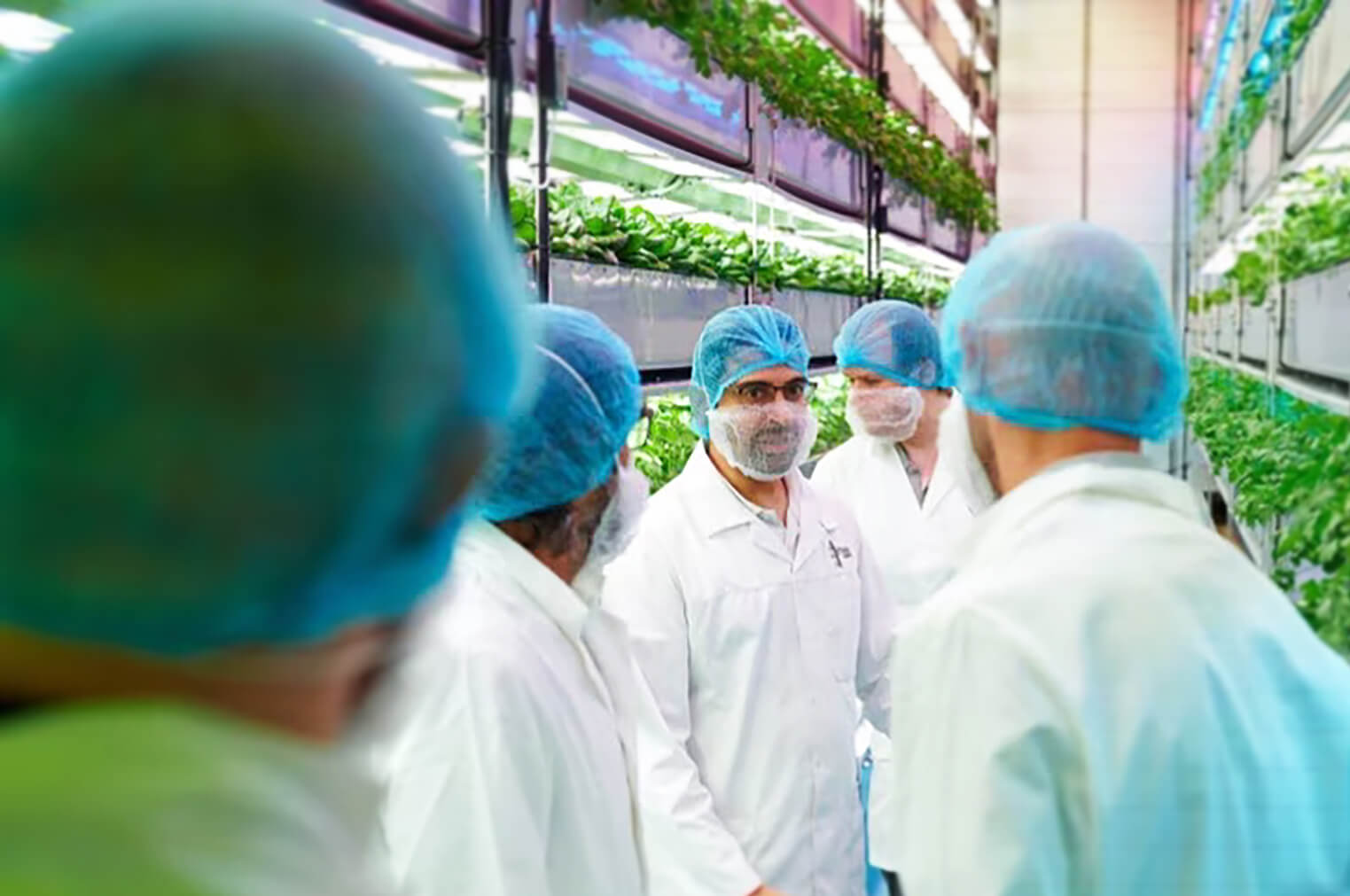
Angel Hill Food Co. has installed hydroponic farming pods at selected customer sites, transforming underutilised indoor spaces into vibrant micro-farms. These installations cultivate fresh produce – such as lemon basil, parsley and rainbow chard – that can be used directly in kitchen preparations or enjoyed by colleagues at harvest events. 

The hydroponic units are designed to operate independently of weather and seasonal constraints, ensuring a consistent supply of fresh greens year-round. This means workplaces can enjoy the benefits of fresh, locally grown produce regardless of outdoor conditions.

Sustainability Meets Engagement

Beyond supplying fresh ingredients, hydroponic farms spark meaningful conversations about Hydroponic Farming, nutrition and environmental stewardship. Colleagues are invited to observe plant growth, participate in harvest events, and even take part in workshops on growing food at home – all of which foster a deeper connection to the food they eat and the ecosystems that support it. 

These interactive initiatives have a dual purpose. Not only do they promote sustainability and wellbeing, but they also strengthen team cohesion and workplace culture. Seeing food grow from seed to plate encourages people to think differently about their relationship with food and sustainability – transforming what might be a passive catering experience into an active learning opportunity.

Bringing Freshness to the Community

Angel Hill Food Co.’s hydroponic farming project extends beyond the kitchen. The produce grown through these systems is being coordinated for donation to local charities, food banks and healthcare facilities, meaning the positive impact reaches community members who need fresh produce most. 

By linking workplace sustainability with community support, the initiative reinforces Angel Hill Food Co.’s commitment to responsible sourcing, social value and environmental stewardship – ensuring that innovation benefits people as well as the planet.

The Benefits of Hydroponic Farming

Hydroponic systems offer distinct advantages over conventional agriculture. They use significantly less water – in some cases up to 90-95% less – and eliminate the need for soil, pesticides and long-distance transportation. This not only reduces environmental impact but also enhances food freshness and safety. 

In addition, hydroponic farms can be scaled vertically or horizontally to fit diverse indoor spaces, making them highly adaptable to workplace environments without requiring extensive land or outdoor access.

A Fresh Approach to Workplace Wellbeing

Angel Hill Food Co.’s adoption of hydroponic technology is more than a sustainability statement – it’s a demonstration of how catering can evolve to meet the health, environmental and social expectations of modern workplaces.

By bringing hydroponic farming into corporate spaces, Angel Hill is not just growing produce; it’s cultivating awareness, encouraging healthier eating habits and inspiring colleagues to think differently about food systems.

As workplace dining increasingly aligns with wellness and sustainability goals, initiatives like this position Angel Hill Food Co. as a forward-thinking partner in creating healthier, greener, and more engaging food experiences – one leaf at a time.