By clicking “Accept All Cookies”, you agree to the storing of cookies on your device and the processing of information obtained via those cookies (including about your preferences, device and online activity) by us and our commercial partners to enhance site navigation, personalise ads, analyse site usage, and assist in our marketing efforts. More information can be found in our Cookies and Privacy Policy. You can amend your cookie settings to reject non-essential cookies by clicking Cookie Settings.
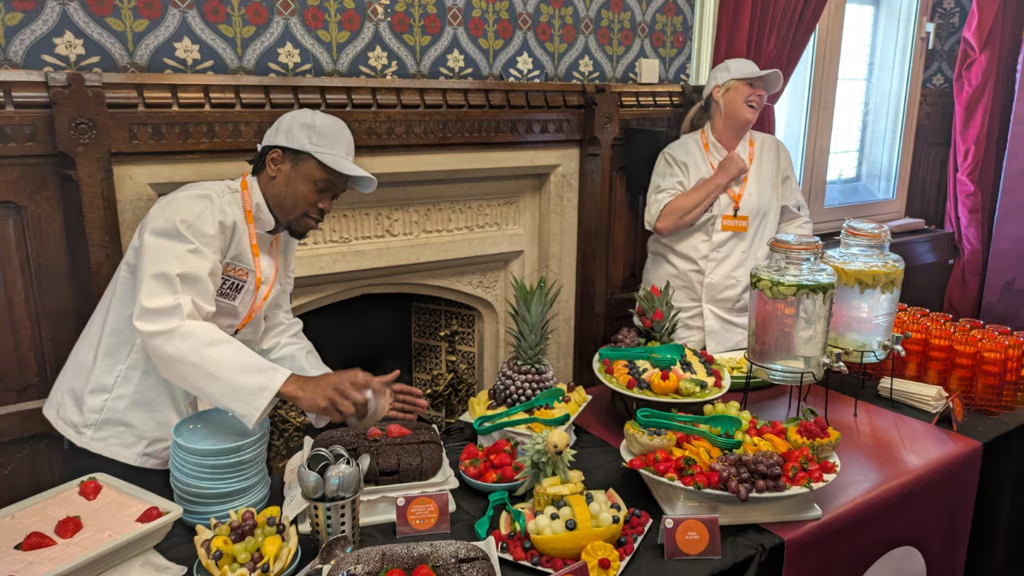
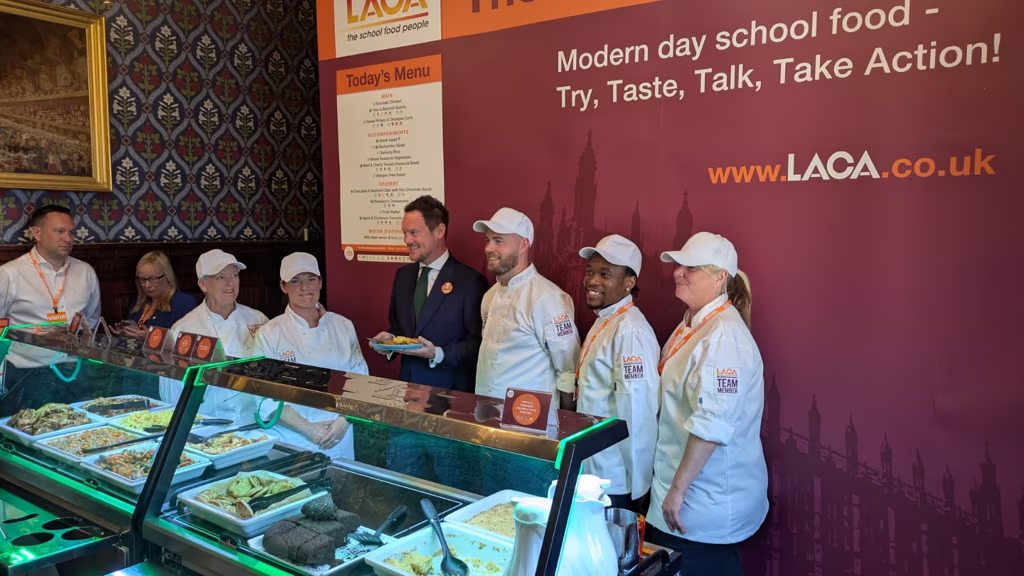
Angel Hill Food Co. proudly joined LACA’s Great School Lunch event at the House of Commons on 29 April 2025, reinforcing its commitment to healthy, high-quality school meals. Representing the company were Jennifer Brown, Catering Manager, and Rob Cass, Operations Manager, who showcased the passion, innovation, and care that go into every meal served to pupils across the UK.
Supporting the Call for Increased Free School Meals Funding
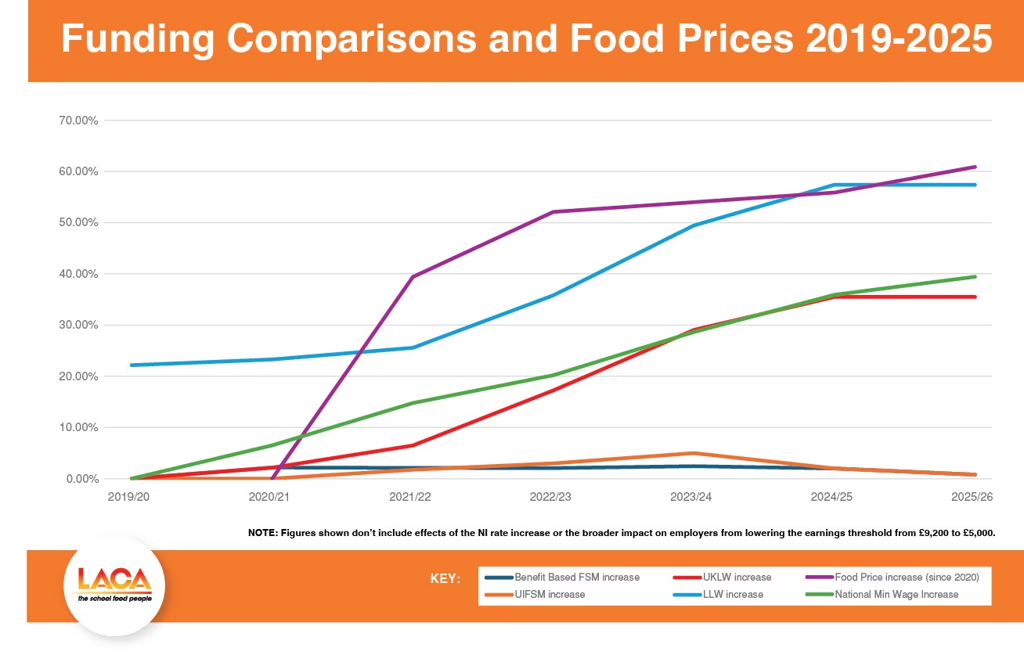
The event formed part of LACA’s national campaign to raise the Free School Meals allowance in England to £3.16 per meal. This funding increase would help schools and families during the cost-of-living crisis, ensuring children continue to receive nutritious, hot meals.
Rob and Jennifer joined catering and education leaders to highlight the importance of nutritious food for every child and to address the challenges schools face — from rising food prices and limited budgets to maintaining high nutritional standards.
Award-Winning School Chef Displays Excellence
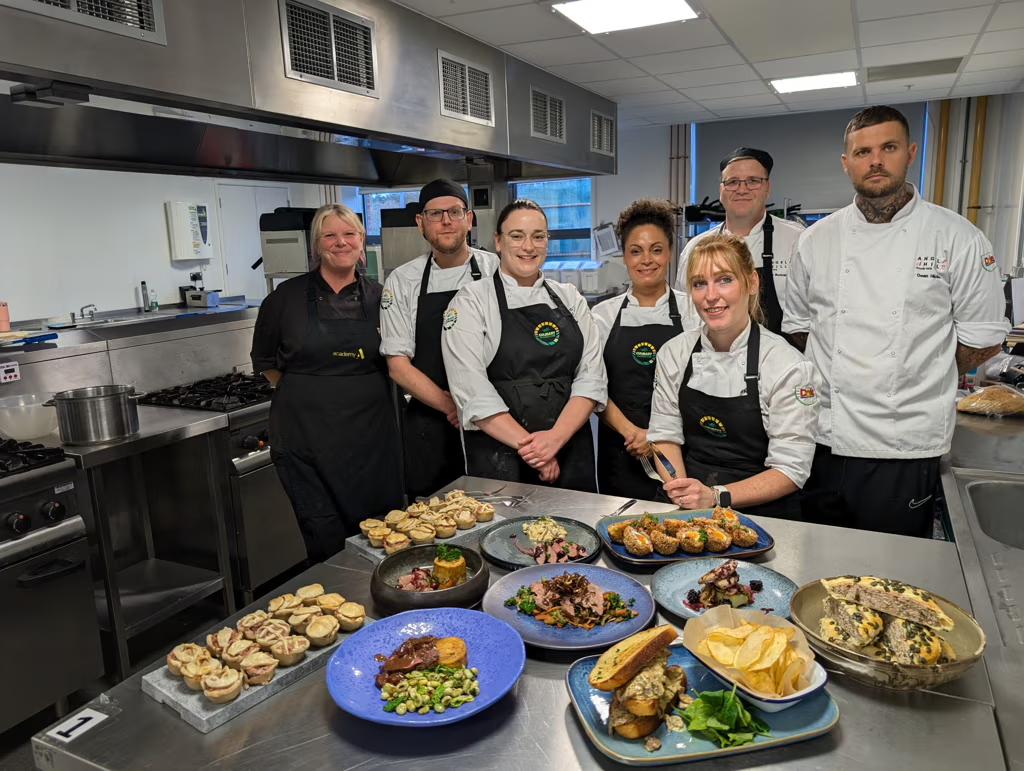
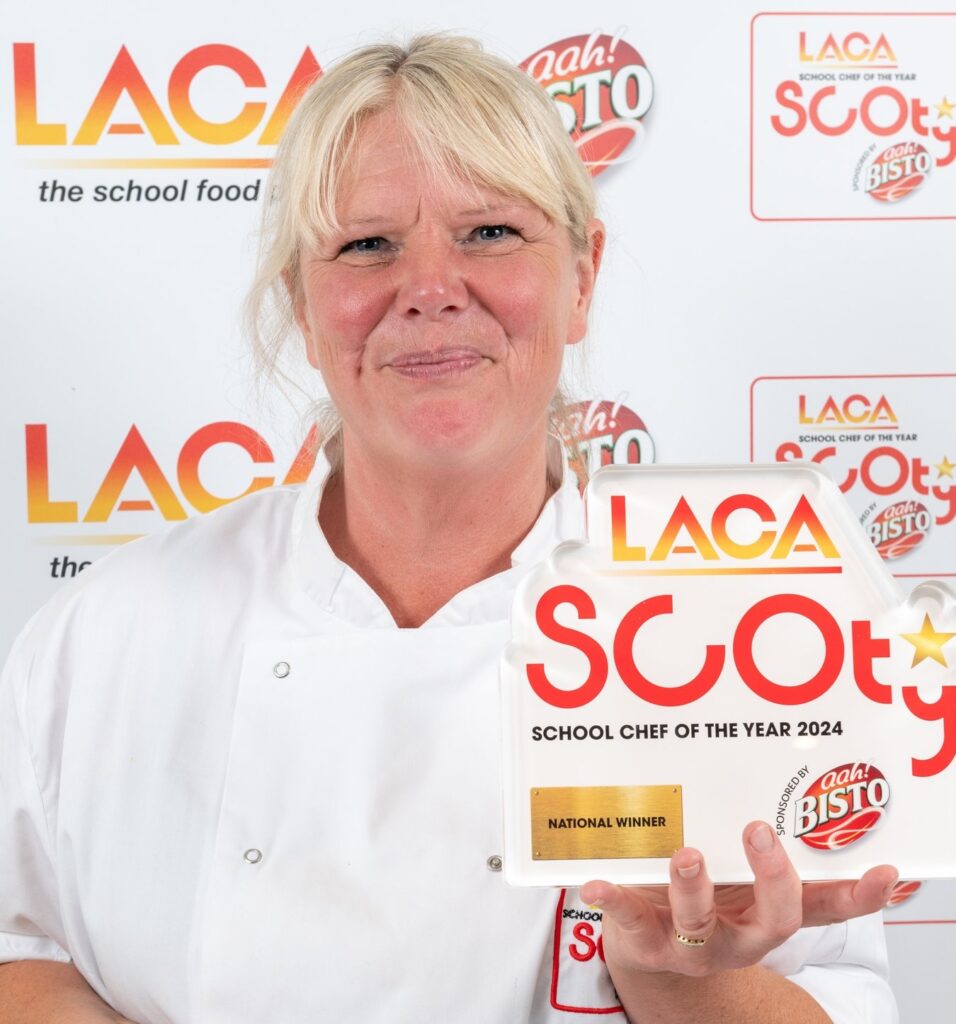
Jennifer Brown, LACA’s 2024 School Chef of the Year, prepared and served lunch to Members of Parliament, offering a first-hand taste of the balanced and appealing meals served in schools nationwide.
Desserts: Chocolate & beetroot cake with hot sauce, strawberry cheesecake, fresh fruit, apple & cinnamon crumble with custard
Jennifer’s participation demonstrated the expertise, creativity, and dedication behind every school meal served by Angel Hill Food Co.
Championing the Future of School Catering
Angel Hill Food Co., part of the OCS Group, supports LACA’s mission to ensure healthy, accessible meals for all pupils. The event also provided Rob Cass, LACA Southwest Vice Chair, with an opportunity to engage MPs on the vital role of school catering teams and the pressing need for better funding.
The presence of Angel Hill at Westminster underscored its leadership in education catering – balancing quality, sustainability, and value – and its commitment to shaping a healthier future for children.
At Angel Hill Food Co., we’re passionate about supporting young people into the workplace and introducing them to exciting career paths within the facilities management and catering industry. As part of this commitment, our team in the Education Sector at North Shropshire College recently hosted two first-year catering students, Zoe and Gabby, for a hands-on work experience placement.
Real-World Catering Skills
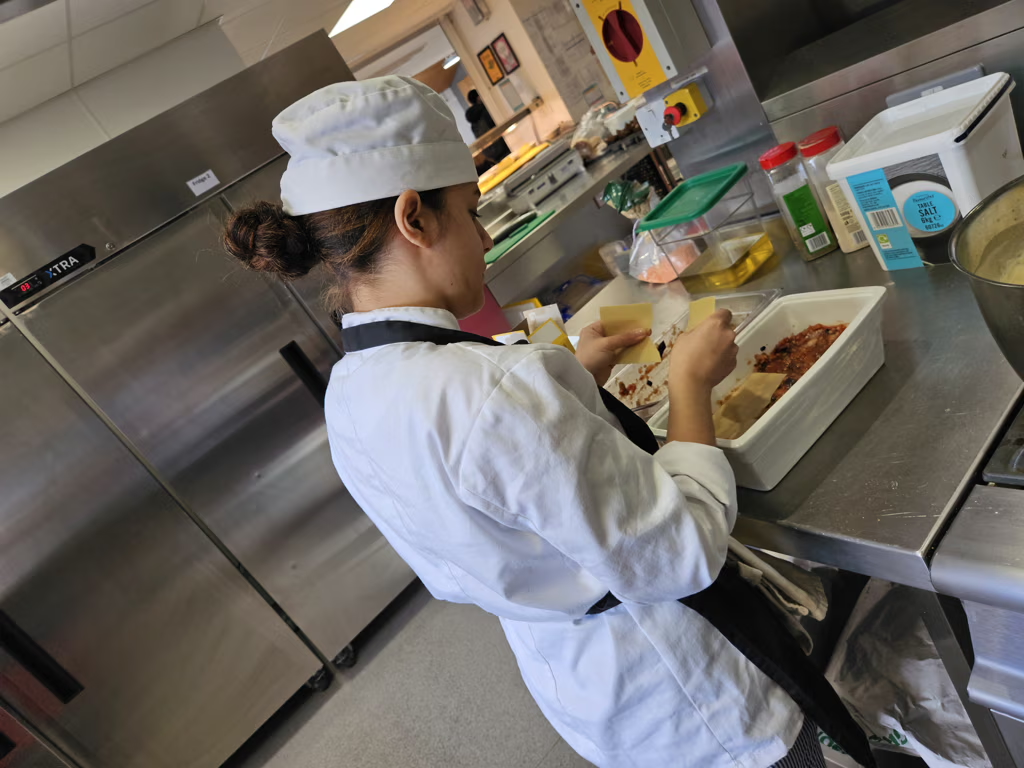
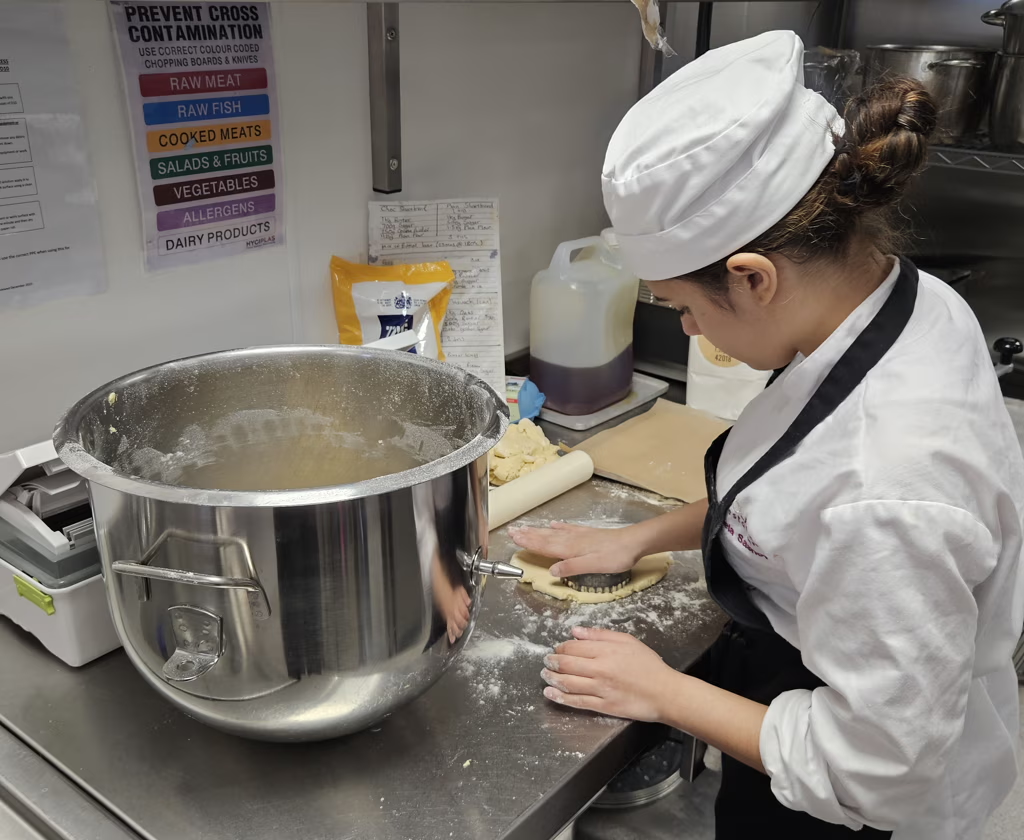
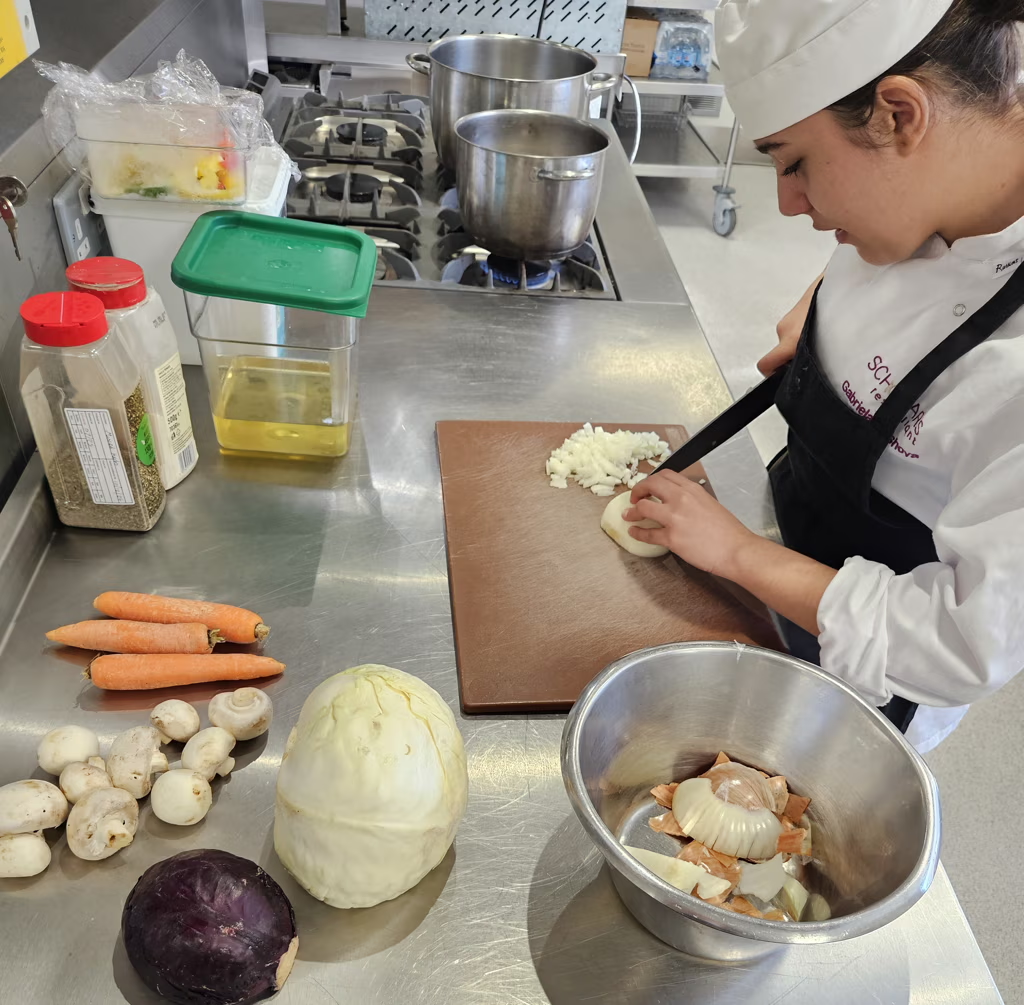
Over two days at the Walford Campus, Zoe and Gabby gained practical experience across all aspects of catering operations. Their activities included stock and delivery management, food and menu preparation, counter service, health and safety management, and kitchen operations.
The students also shadowed Estate Chef Manager, Francesca Gilmore, learning essential back-of-house skills such as income administration, product ordering, and menu planning.
Francesca emphasised the value of the experience:
This two-day placement gave both students a clear insight into a typical day in the further education catering sector. It showcased an alternative catering career path and could be a stepping stone toward an apprenticeship or a long-term role in our industry.
Inspiring the Next Generation of Chefs
For Zoe and Gabby, the placement was both educational and motivating:
Zoe: “The placement was very welcoming, and I received outstanding support and guidance. I took on a variety of tasks and improved my communication skills, which boosted my confidence.”
Gabby: “I loved it! This experience confirmed my passion for catering as a career. I enjoyed the variety of tasks and working with such a friendly and supportive team.”
Building Careers in Catering and Facilities Management
We believe in nurturing future talent by giving young people the opportunity to explore fulfilling careers through work experience and apprenticeships. By doing so, we help to shape the workforce of the future and strengthen the catering industry.
If you’re interested in offering or taking part in work experience programmes, get in touch to learn how OCS and Angel Hill Food Co. are developing the next generation of catering professionals.
Delivering high-quality food in schools has never been more complex. Education caterers are expected to meet strict nutritional standards, appeal to increasingly discerning young audiences and support wellbeing – all while operating within some of the tightest financial constraints in the sector. Achieving excellence under these conditions requires a thoughtful, strategic approach to budget school catering, where every decision is designed to balance cost, quality and long-term value.
In today’s education environment, budgeting is not simply about reducing spend. It’s about understanding where investment matters most, planning menus intelligently and empowering catering teams to work creatively within financial frameworks that are often under pressure.
Making smarter choices with limited resources
One of the defining challenges of budget school catering is managing rising costs across food, energy and labour, while funding levels remain largely fixed. This places significant responsibility on catering teams to plan menus that are both cost-effective and nutritionally robust.
Seasonal menu planning plays a vital role here. By building dishes around ingredients that are readily available and at their best, caterers can control costs while improving flavour and quality. Careful supplier partnerships, waste reduction strategies and forward planning all contribute to stretching budgets further – without compromising the meal experience for students.
This approach reinforces a key principle: value and quality are not opposites. With the right planning and expertise, simple ingredients can be transformed into meals that are appealing, nutritious and satisfying.
Expertise that drives excellence
Few people understand the realities of education catering better than Jennifer Brown, 2024 LACA School Chef of the Year. Her recognition reflects not only culinary skill, but an exceptional ability to deliver high standards within the financial pressures schools face every day.
Jennifer believes that success in budget school catering starts with people, not price points:
Great school food doesn’t start with a spreadsheet – it starts with skilled, confident teams who understand how to plan, cook and adapt. When chefs are properly supported, they can deliver nutritious, appealing meals while still working within very real budget constraints.
Her insight highlights a crucial truth across the sector: budgeting works best when it enables capability rather than restricting creativity.
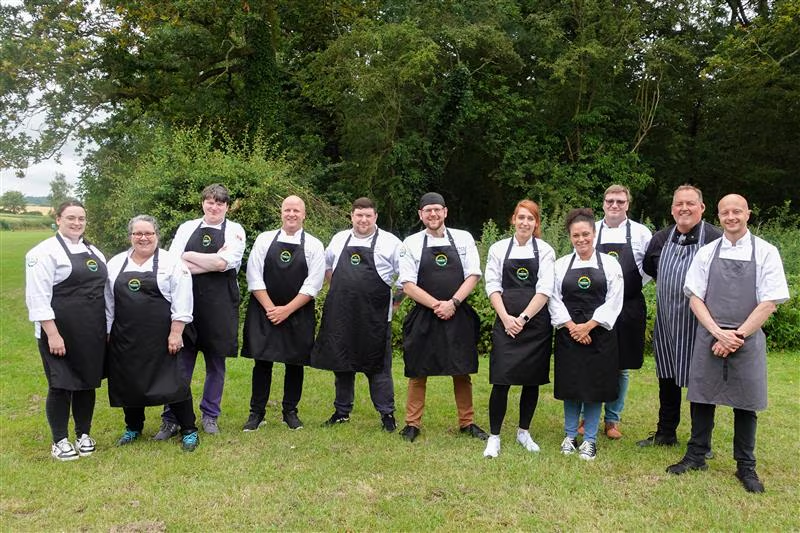
Jennifer Brown teaching the Culinary Classroom 24/25 cohort how to cook with underutilised British produce.
Investing in skills, not just systems
Training and development play a critical role in helping catering teams work effectively within tight budgets. When chefs are confident in portion control, ingredient utilisation and menu planning, they are far better equipped to reduce waste and maintain consistency – both of which directly protect margins.
Skilled teams can make thoughtful decisions about how ingredients are used across menus, ensuring that value is maximised without compromising quality. This not only improves financial performance but also boosts morale and pride in the food being served.
For many schools, investing in people is one of the most impactful ways to improve outcomes in budget school catering – creating kitchens that are resilient, adaptable and focused on continuous improvement.
Beyond the plate: the wider role of school catering
School catering has an influence that extends far beyond lunchtime. For many pupils, school meals provide the most balanced nutrition they receive in a day, making the role of caterers central to health, wellbeing and educational performance.
As a result, budget decisions carry long-term implications. Thoughtful planning can unlock wider benefits – from supporting food education and engagement to strengthening community connections through inclusive meal programmes.
Rather than limiting ambition, effective budgeting can act as a catalyst for smarter, more meaningful food provision.
Planning for a sustainable future
As costs continue to rise, the challenge for education catering will remain complex. Meeting it requires collaboration across schools, caterers and policymakers – alongside funding models that better reflect the true cost of delivering nutritious, high-quality meals.
In the meantime, the focus remains clear: skilled teams, smart planning and purposeful investment. When these elements come together, budget school catering can deliver far more than compliance – it can deliver excellence.
By treating budgets as a strategic tool rather than a limitation, education caterers can continue to serve food that nourishes bodies, supports learning and makes a lasting difference in young people’s lives.
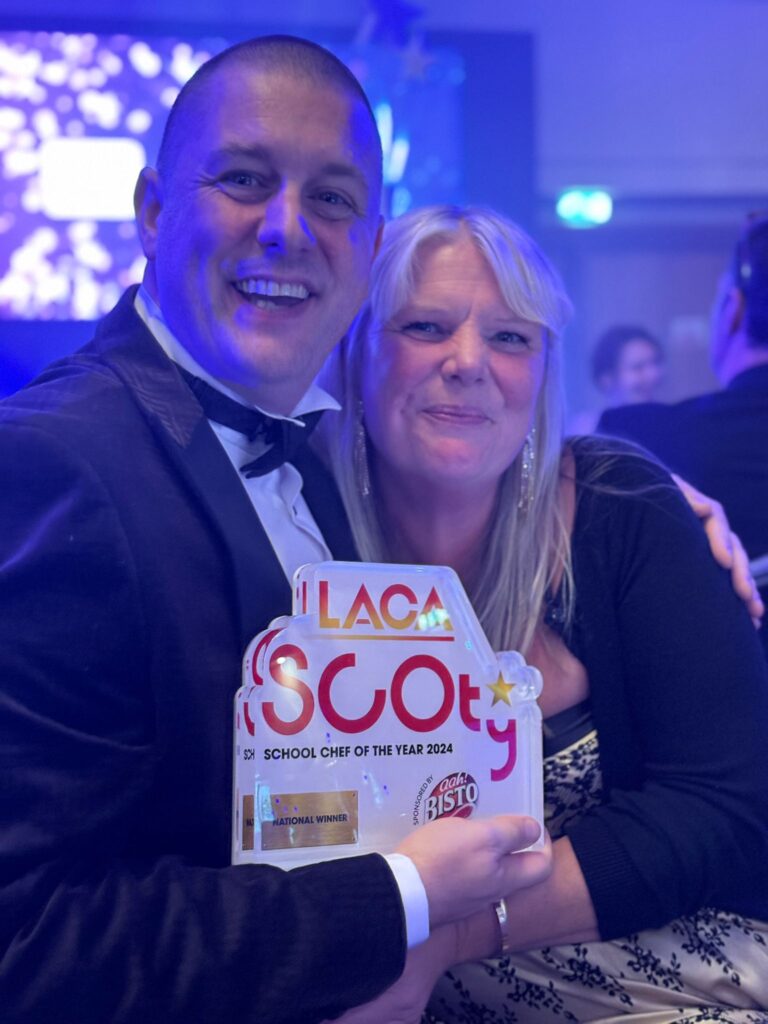
Delivering exceptional food in schools isn’t just about meeting standards – it’s about creating meals that nourish young bodies, excite young palates and support lifelong healthy habits. For Jennifer Brown, a leading chef with Angel Hill Food Co. and the 2024 LACA School Chef of the Year, school catering is both a craft and a mission.
In her role, Jennifer has helped transform school kitchens into environments that prioritise flavour, nutrition and engagement – all within the financial realities of education catering. We sat down with her to explore her journey, philosophy and what excellence in school catering truly means.
What drew you to a career in food and, specifically, school catering?
My journey started with a love of food and a curiosity about how it connects people. Early on, I saw dish after dish being prepared that technically met standards but didn’t connect with the people eating it. I wanted to be part of something different – food that really works in the real world.
School catering appealed to me because you’re feeding young people at such a formative stage. Schools are where taste preferences and habits are being shaped. If we get this right – if we give them wholesome, delicious meals – we’re contributing to better health, better focus in the classroom and even better outcomes later in life.
Jennifer’s progression into education catering wasn’t accidental – it was intentional. She wanted to take culinary excellence out of fine-dining zones and into everyday food that mattered.
As the 2024 LACA School Chef of the Year, what does that achievement mean to you?
It’s an incredible honour, especially in a profession where so many outstanding chefs are doing amazing work. But for me, it’s less about the title and more about what it stands for – recognition of the commitment, creativity and hard work that goes into school food every single day.
People often underestimate the complexity of school catering. There are standards to meet, different age groups to cater for, budget constraints… and on top of that, the food still has to be something kids want to eat. Winning that award felt like validation that this work matters – not just to me, but to the wider profession.
Her win has also shone a spotlight on the vibrancy and professionalism within school catering – inspiring colleagues and young chefs alike.
What does excellence in school catering look like to you?
Excellence isn’t just about technical skill – it’s about empathy and understanding your audience. When I think about excellence, it means:
• Food that supports nutrition and wellbeing
• Menus that are creative but achievable in a real school kitchen
• Teams that are confident, proud and capable
• And most importantly, food that kids want to eat.
This focus on eating enjoyment alongside nutritional value is what sets Jennifer’s philosophy apart – especially in a space where policy and practice often collide.
How do you balance creativity with the strict nutritional standards required in school catering?
You have to be smart, not restrictive. Standards exist for a reason – they protect health and consistency – but that doesn’t mean food has to be bland or predictable. The trick is combining flavour with function. For example, using herbs and spices to bring dishes alive without adding unnecessary fat or salt.
We experiment with different cooking techniques, global influences and seasonal produce to keep the menu exciting. And the best part? When kids come up to you and say, ‘Can we have this again?’ – you know you’ve struck the right balance.
Her approach shows that compliance and flavour aren’t mutually exclusive – they can be mutually reinforcing.
What are some of the ways you encourage young people to engage with food?
Engagement comes from experience. We host themed food weeks, taste challenges and learning moments where students can see, touch and even prepare food. It’s about making food education interactive.
For younger children, it might be as simple as ‘meet the vegetable’ boards or build-your-own stations. For older students, it could be nutritional talks or kitchen tours. The more agency they feel, the more curious they become – and curiosity is the best driver for healthy eating.
By making food an experience rather than just a service, Jennifer is helping change perceptions about school meals from “just lunch” to an opportunity for exploration and learning.
What advice would you give to chefs starting in school catering?
Be humble, be curious and never stop learning. Every kitchen is different – different equipment, different teams, different needs. You have to adapt, stay fresh in your thinking and always ask: how can I make this better?
Also, don’t underestimate the value of mentorship and community. Talk to other chefs, share ideas, and learn from what others are doing well. There’s enormous collective wisdom in this profession – and we grow stronger when we talk to each other.
Her advice underscores the collaborative spirit that drives much of the positive change within education catering.
What’s next for you and your work in school catering?
I want to keep pushing boundaries. Whether that’s new menu concepts, more engagement programmes, sustainability initiatives, or helping young chefs see school food as a creative and rewarding career path – there’s always something to improve.
Most importantly, I want to continue building confidence in teams. Because when the people behind the counter believe in what they’re doing, that confidence shines through in every plate they serve.
Jennifer’s vision is a reminder that excellence in school catering is ongoing – built one menu, one lesson and one happy student at a time.
Championing Culinary Purpose
Jennifer Brown’s journey and philosophy stand as a powerful example of what’s possible when passion meets purpose in school catering. Her work reflects a deeper commitment to nourishing young people, developing strong teams and creating food that is both excellent and inclusive.
As the sector continues to evolve, voices like hers help shape a future where school meals are not just important – they are exceptional.