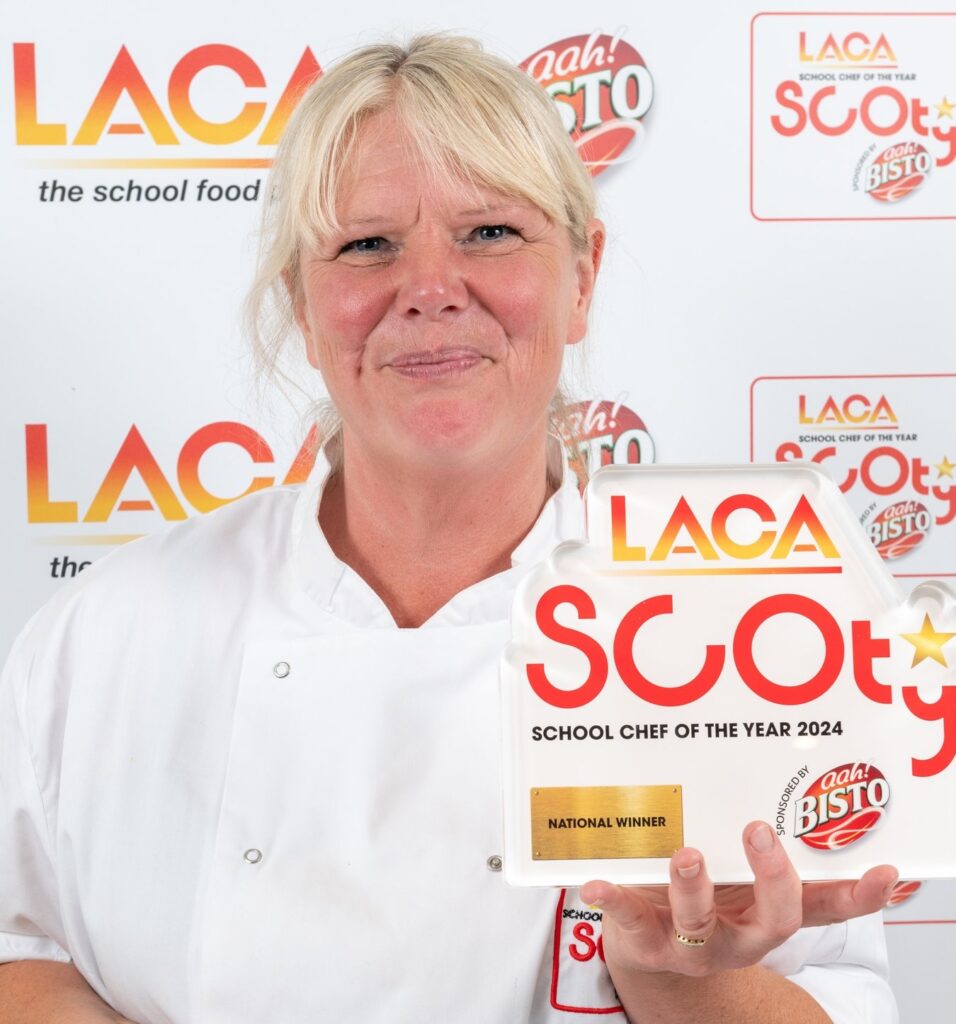
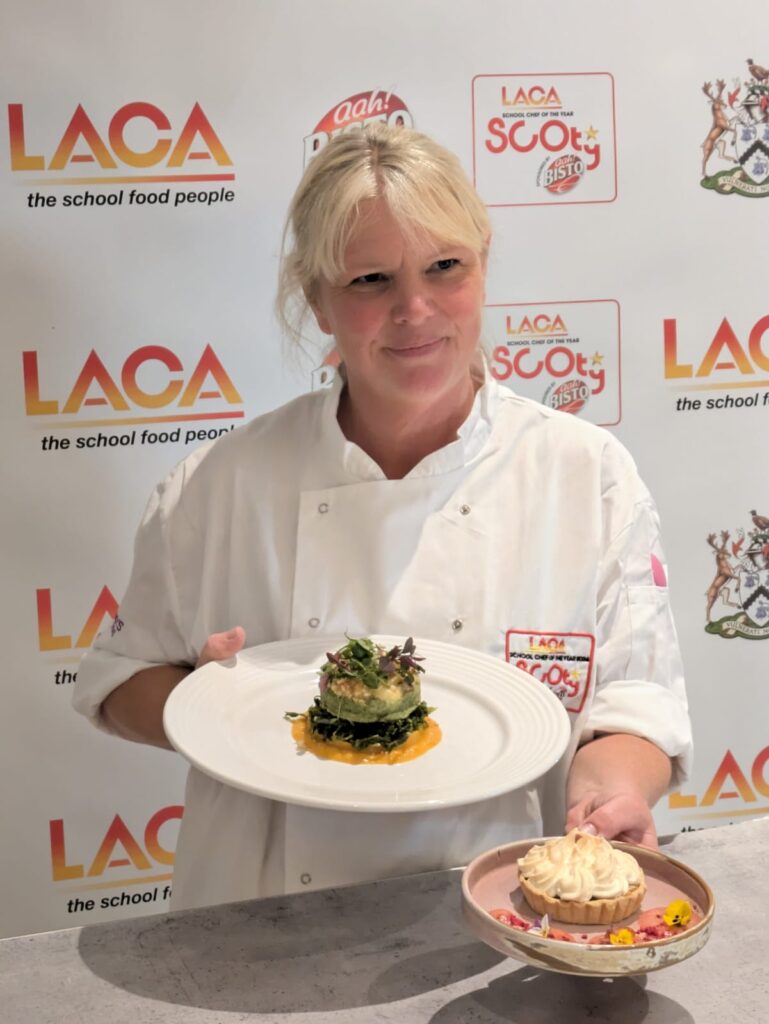
Delivering exceptional food in schools isn’t just about meeting standards – it’s about creating meals that nourish young bodies, excite young palates and support lifelong healthy habits. For Jennifer Brown, a leading chef with Angel Hill Food Co. and the 2024 LACA School Chef of the Year, school catering is both a craft and a mission.
In her role, Jennifer has helped transform school kitchens into environments that prioritise flavour, nutrition and engagement – all within the financial realities of education catering. We sat down with her to explore her journey, philosophy and what excellence in school catering truly means.
What drew you to a career in food and, specifically, school catering?
My journey started with a love of food and a curiosity about how it connects people. Early on, I saw dish after dish being prepared that technically met standards but didn’t connect with the people eating it. I wanted to be part of something different – food that really works in the real world.
School catering appealed to me because you’re feeding young people at such a formative stage. Schools are where taste preferences and habits are being shaped. If we get this right – if we give them wholesome, delicious meals – we’re contributing to better health, better focus in the classroom and even better outcomes later in life.
Jennifer’s progression into education catering wasn’t accidental – it was intentional. She wanted to take culinary excellence out of fine-dining zones and into everyday food that mattered.
As the 2024 LACA School Chef of the Year, what does that achievement mean to you?
It’s an incredible honour, especially in a profession where so many outstanding chefs are doing amazing work. But for me, it’s less about the title and more about what it stands for – recognition of the commitment, creativity and hard work that goes into school food every single day.
People often underestimate the complexity of school catering. There are standards to meet, different age groups to cater for, budget constraints… and on top of that, the food still has to be something kids want to eat. Winning that award felt like validation that this work matters – not just to me, but to the wider profession.
Her win has also shone a spotlight on the vibrancy and professionalism within school catering – inspiring colleagues and young chefs alike.
What does excellence in school catering look like to you?
Excellence isn’t just about technical skill – it’s about empathy and understanding your audience. When I think about excellence, it means:
• Food that supports nutrition and wellbeing
• Menus that are creative but achievable in a real school kitchen
• Teams that are confident, proud and capable
• And most importantly, food that kids want to eat.
This focus on eating enjoyment alongside nutritional value is what sets Jennifer’s philosophy apart – especially in a space where policy and practice often collide.

How do you balance creativity with the strict nutritional standards required in school catering?
You have to be smart, not restrictive. Standards exist for a reason – they protect health and consistency – but that doesn’t mean food has to be bland or predictable. The trick is combining flavour with function. For example, using herbs and spices to bring dishes alive without adding unnecessary fat or salt.
We experiment with different cooking techniques, global influences and seasonal produce to keep the menu exciting. And the best part? When kids come up to you and say, ‘Can we have this again?’ – you know you’ve struck the right balance.
Her approach shows that compliance and flavour aren’t mutually exclusive – they can be mutually reinforcing.
What are some of the ways you encourage young people to engage with food?
Engagement comes from experience. We host themed food weeks, taste challenges and learning moments where students can see, touch and even prepare food. It’s about making food education interactive.
For younger children, it might be as simple as ‘meet the vegetable’ boards or build-your-own stations. For older students, it could be nutritional talks or kitchen tours. The more agency they feel, the more curious they become – and curiosity is the best driver for healthy eating.
By making food an experience rather than just a service, Jennifer is helping change perceptions about school meals from “just lunch” to an opportunity for exploration and learning.
What advice would you give to chefs starting in school catering?
Be humble, be curious and never stop learning. Every kitchen is different – different equipment, different teams, different needs. You have to adapt, stay fresh in your thinking and always ask: how can I make this better?
Also, don’t underestimate the value of mentorship and community. Talk to other chefs, share ideas, and learn from what others are doing well. There’s enormous collective wisdom in this profession – and we grow stronger when we talk to each other.
Her advice underscores the collaborative spirit that drives much of the positive change within education catering.
What’s next for you and your work in school catering?
I want to keep pushing boundaries. Whether that’s new menu concepts, more engagement programmes, sustainability initiatives, or helping young chefs see school food as a creative and rewarding career path – there’s always something to improve.
Most importantly, I want to continue building confidence in teams. Because when the people behind the counter believe in what they’re doing, that confidence shines through in every plate they serve.
Jennifer’s vision is a reminder that excellence in school catering is ongoing – built one menu, one lesson and one happy student at a time.
Championing Culinary Purpose
Jennifer Brown’s journey and philosophy stand as a powerful example of what’s possible when passion meets purpose in school catering. Her work reflects a deeper commitment to nourishing young people, developing strong teams and creating food that is both excellent and inclusive.
As the sector continues to evolve, voices like hers help shape a future where school meals are not just important – they are exceptional.