Delivering high-quality food in schools has never been more complex. Education caterers are expected to meet strict nutritional standards, appeal to increasingly discerning young audiences and support wellbeing – all while operating within some of the tightest financial constraints in the sector. Achieving excellence under these conditions requires a thoughtful, strategic approach to budget school catering, where every decision is designed to balance cost, quality and long-term value.
In today’s education environment, budgeting is not simply about reducing spend. It’s about understanding where investment matters most, planning menus intelligently and empowering catering teams to work creatively within financial frameworks that are often under pressure.
Making smarter choices with limited resources
One of the defining challenges of budget school catering is managing rising costs across food, energy and labour, while funding levels remain largely fixed. This places significant responsibility on catering teams to plan menus that are both cost-effective and nutritionally robust.
Seasonal menu planning plays a vital role here. By building dishes around ingredients that are readily available and at their best, caterers can control costs while improving flavour and quality. Careful supplier partnerships, waste reduction strategies and forward planning all contribute to stretching budgets further – without compromising the meal experience for students.
This approach reinforces a key principle: value and quality are not opposites. With the right planning and expertise, simple ingredients can be transformed into meals that are appealing, nutritious and satisfying.
Expertise that drives excellence
Few people understand the realities of education catering better than Jennifer Brown, 2024 LACA School Chef of the Year. Her recognition reflects not only culinary skill, but an exceptional ability to deliver high standards within the financial pressures schools face every day.
Jennifer believes that success in budget school catering starts with people, not price points:
Great school food doesn’t start with a spreadsheet – it starts with skilled, confident teams who understand how to plan, cook and adapt. When chefs are properly supported, they can deliver nutritious, appealing meals while still working within very real budget constraints.
Her insight highlights a crucial truth across the sector: budgeting works best when it enables capability rather than restricting creativity.

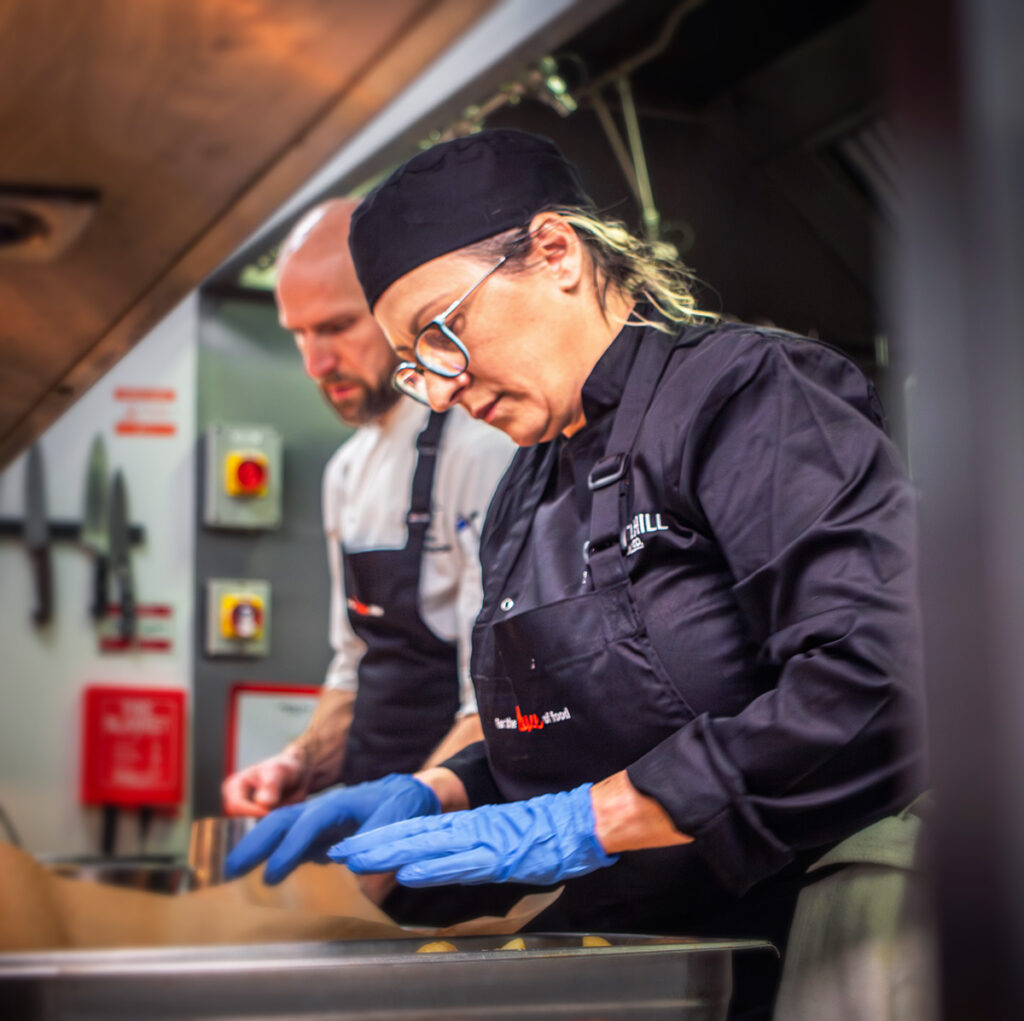
Jennifer Brown teaching the Culinary Classroom 24/25 cohort how to cook with underutilised British produce.
Investing in skills, not just systems
Training and development play a critical role in helping catering teams work effectively within tight budgets. When chefs are confident in portion control, ingredient utilisation and menu planning, they are far better equipped to reduce waste and maintain consistency – both of which directly protect margins.
Skilled teams can make thoughtful decisions about how ingredients are used across menus, ensuring that value is maximised without compromising quality. This not only improves financial performance but also boosts morale and pride in the food being served.
For many schools, investing in people is one of the most impactful ways to improve outcomes in budget school catering – creating kitchens that are resilient, adaptable and focused on continuous improvement.
Beyond the plate: the wider role of school catering
School catering has an influence that extends far beyond lunchtime. For many pupils, school meals provide the most balanced nutrition they receive in a day, making the role of caterers central to health, wellbeing and educational performance.
As a result, budget decisions carry long-term implications. Thoughtful planning can unlock wider benefits – from supporting food education and engagement to strengthening community connections through inclusive meal programmes.
Rather than limiting ambition, effective budgeting can act as a catalyst for smarter, more meaningful food provision.
Planning for a sustainable future
As costs continue to rise, the challenge for education catering will remain complex. Meeting it requires collaboration across schools, caterers and policymakers – alongside funding models that better reflect the true cost of delivering nutritious, high-quality meals.
In the meantime, the focus remains clear: skilled teams, smart planning and purposeful investment. When these elements come together, budget school catering can deliver far more than compliance – it can deliver excellence.
By treating budgets as a strategic tool rather than a limitation, education caterers can continue to serve food that nourishes bodies, supports learning and makes a lasting difference in young people’s lives.