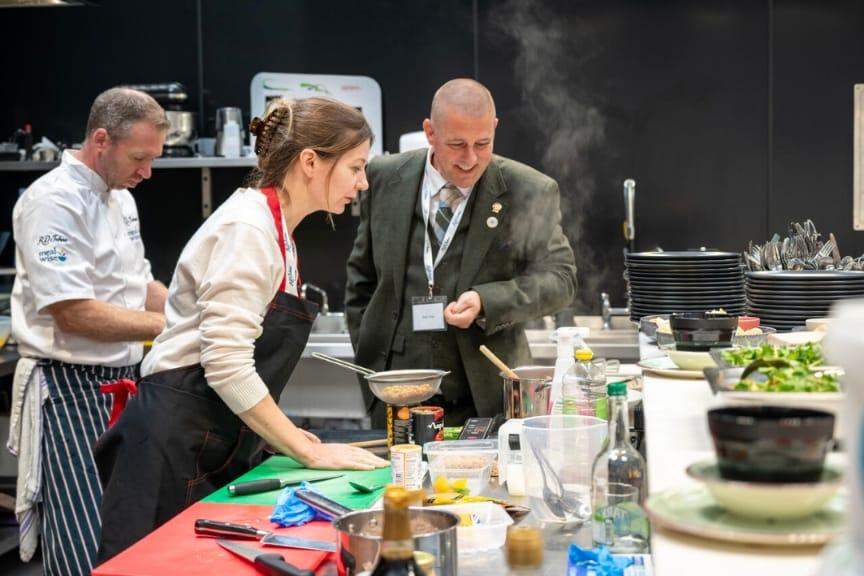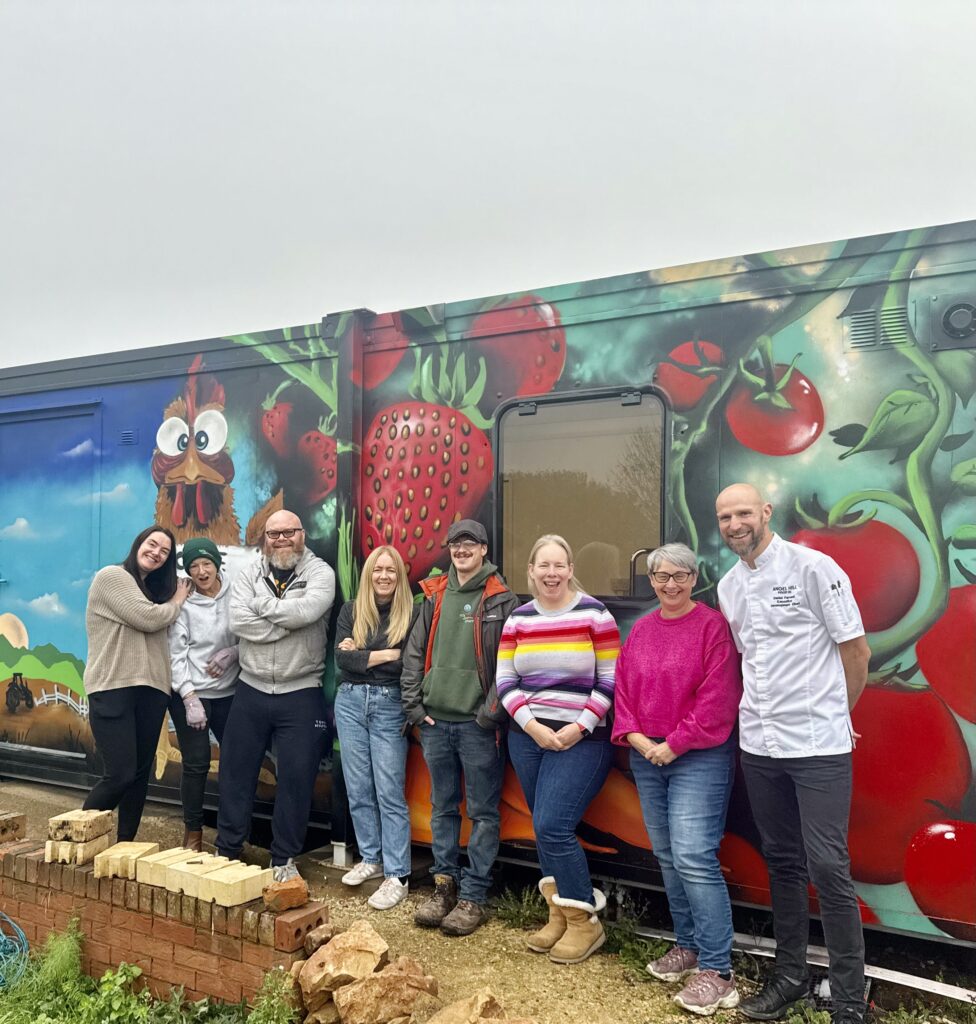
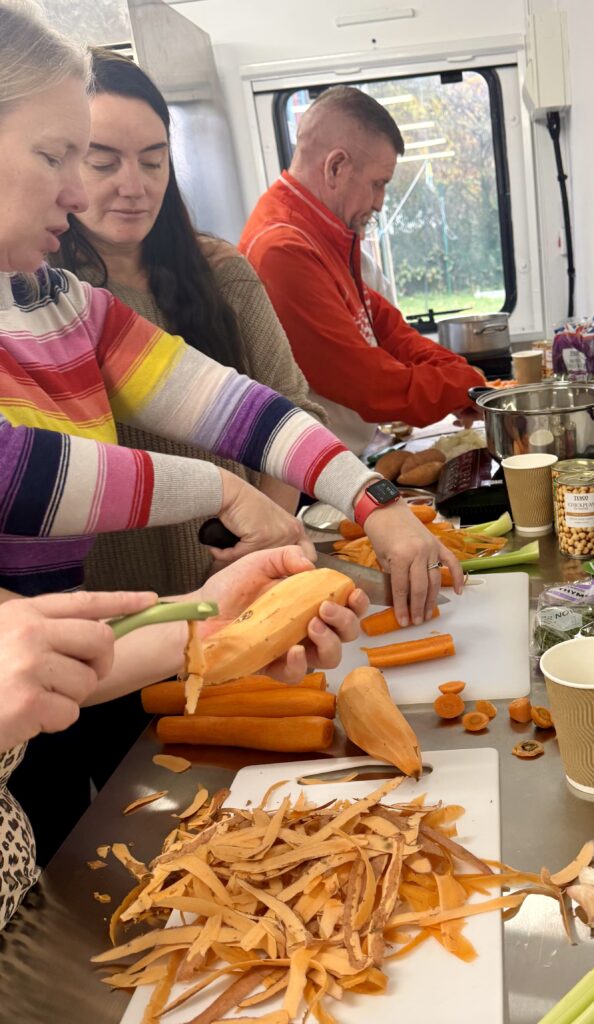
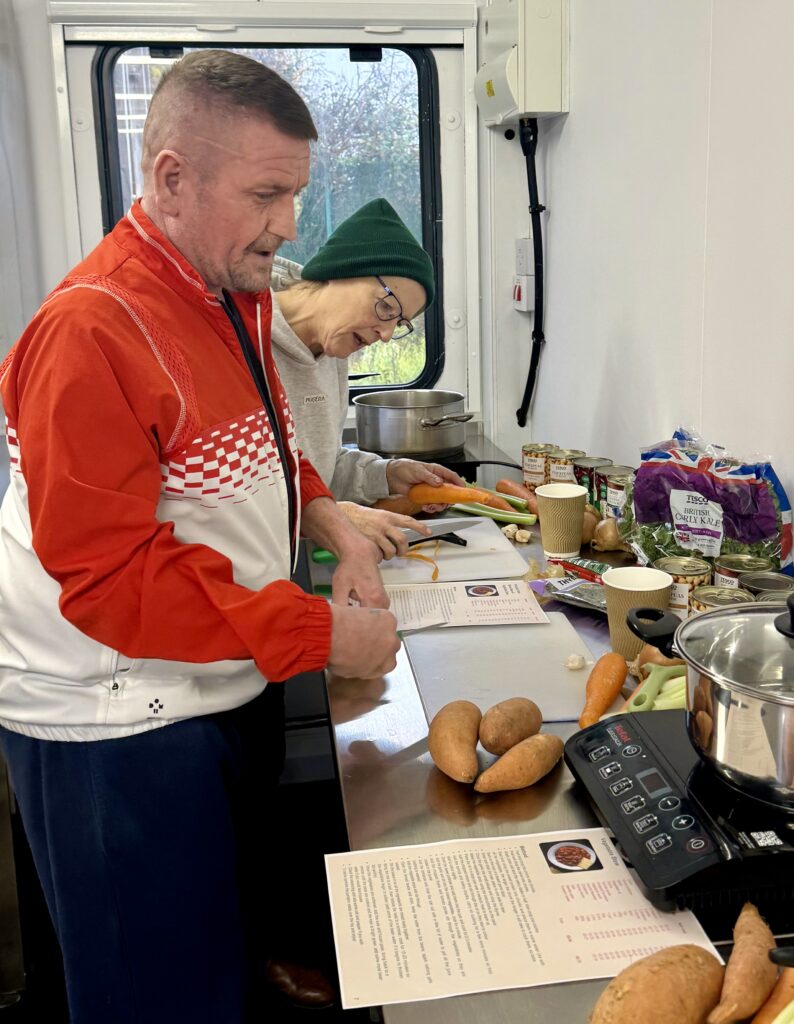
OCS and Angel Hill Food Co. partnered with Rhubarb Farm, The Third Space and the wider recovery community to deliver a cookery and nutrition workshop for people in recovery from drug or alcohol use and people experiencing mental health difficulties. The workshop was supported through connections developed across the Growing Recovery in Derbyshire (GRID) network. Working in pairs, participants cooked a hearty mixed bean and vegetable stew, talked about the food they enjoy and explored ways to make their food shops go further.
For Kellie Newell, Head of Social Value at OCS, the starting point was a conversation with Gill Quayle from Derbyshire County Council. Through her work supporting recovery communities across Derbyshire, Gill helped connect the organisations involved.
Growing Recovery in Derbyshire (GRID) is Derbyshire’s drug and alcohol recovery brand, bringing together organisations, projects and people with lived experience to support, showcase and promote recovery across the county. Through the GRID website, people can find recovery projects, groups, meetings, inspirational stories, the lived experience network, and opportunities across Derbyshire.

A Familiar Place to Try Something New
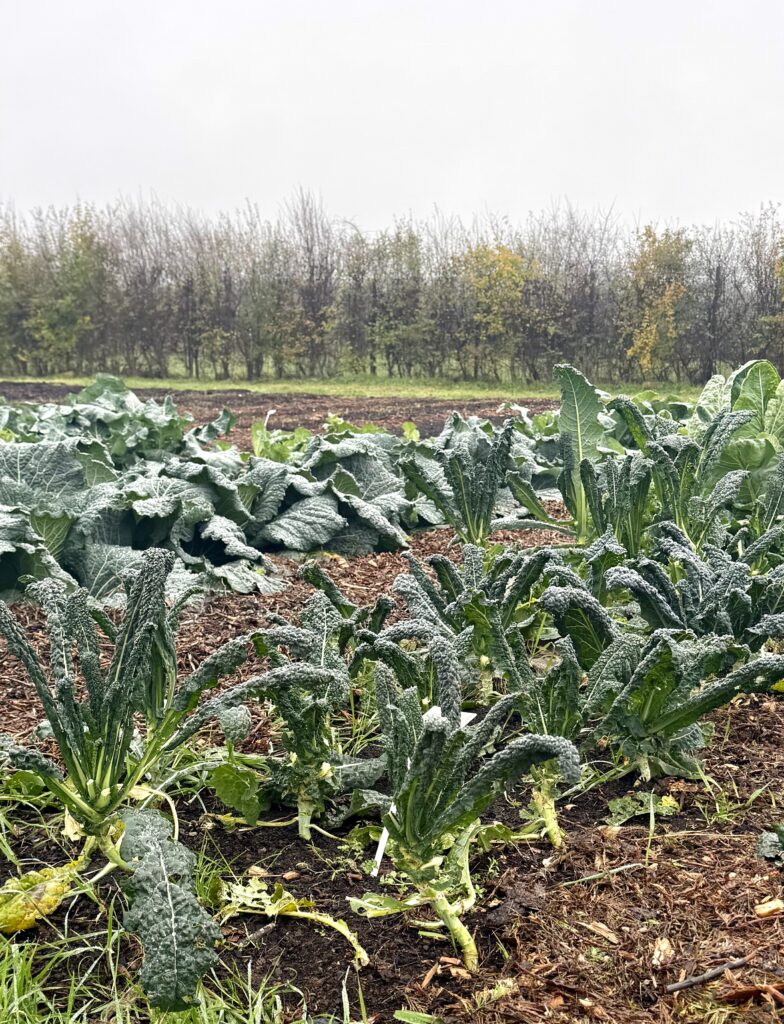
Through her work, Gill knows how much it can take to walk into a room where you don’t know anyone. At Rhubarb Farm, people could try something new among familiar faces. Before the workshop, Angel Hill colleagues visited the kitchen and spoke with Ben Sofield, Substance Use Recovery Lead at the farm and its sister project, The Third Space. Together, they chose a dish the group could afford to make again and adapt to whatever was already in the cupboard.
“It feels collaborative,” Gill said. She particularly valued having a booklet with the recipe, shopping tips and ideas for adapting the dish. “It’s difficult to retain all of that when you go home and try to do it yourself.”
For Ben, who first came to the farm on a placement during his own recovery five years ago, that moment at home was the reason for the workshop. A couple of people taking part had recently moved into a place of their own. Ben put the everyday decisions facing someone cooking for themselves into words. “How am I going to cook this on a budget? How do I make it go further? Am I going to be full? Am I going to enjoy it, actually?”
Ahead of the workshop, Ben suggested including supermarket own brands, frozen and tinned ingredients, and advice on storing leftovers. “Sometimes convenience foods are all someone can afford, manage or have the energy to prepare, particularly when they’re struggling with their mental health or recovery,” Ben expressed. He wanted people to leave “feeling that eating well is achievable, regardless of their circumstances”.
“We Just Want You to Come Back Again”
For one participant, having someone alongside her in the kitchen made a difference. “Sometimes I need a bit of support with detailed jobs, and the team helped me work through the recipe. I really enjoyed cooking with everyone. Thanks for a lovely day.”
Another participant enjoyed trying sweet potato prepared in a way they wouldn’t usually eat it at home. Someone else was surprised by how much stew they’d made in one pan. There was enough to freeze for another day.
For Jill, the highlight was cooking together. “We all worked together. So nice, so positive. Really nice. We just want you to come back again.”
A Recipe to Take Home
Amy Teichman, Head of Nutrition at Angel Hill Food Co., built her session around a question. “How do you make food work a little bit harder for you?” She started with foods people already ate. If lunch was a Pot Noodle, what could they add to it? A spoonful of seeds could add fibre to a favourite yoghurt. Ground flaxseed could go straight into the stew. One participant said they hadn’t known what they could use flaxseed for until they saw it go into the pan.
Ben had asked for straightforward explanations of how nutrients relate to energy, mood and wellbeing. He highlighted that thiamine, or vitamin B1, as particularly relevant to people in recovery from alcohol dependence. Amy talked the group through thiamine, iron and fibre and invited questions throughout. She and her team brought the recipe and practical tips together in a Goodness Guide people could refer to when shopping or cooking at home.
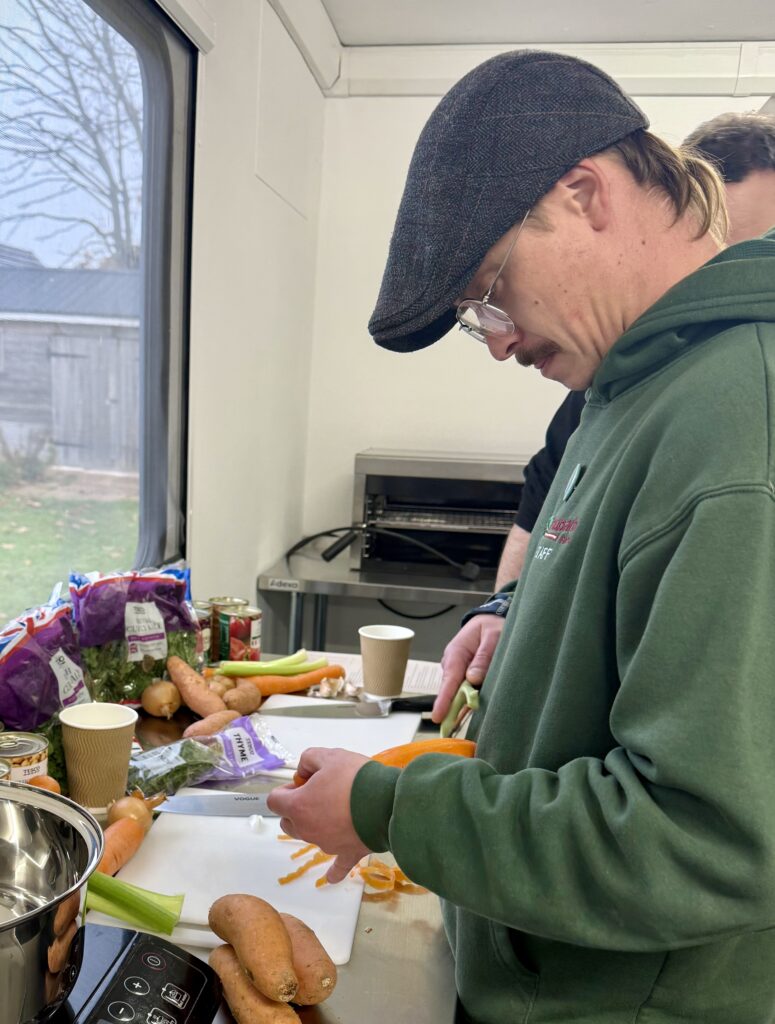
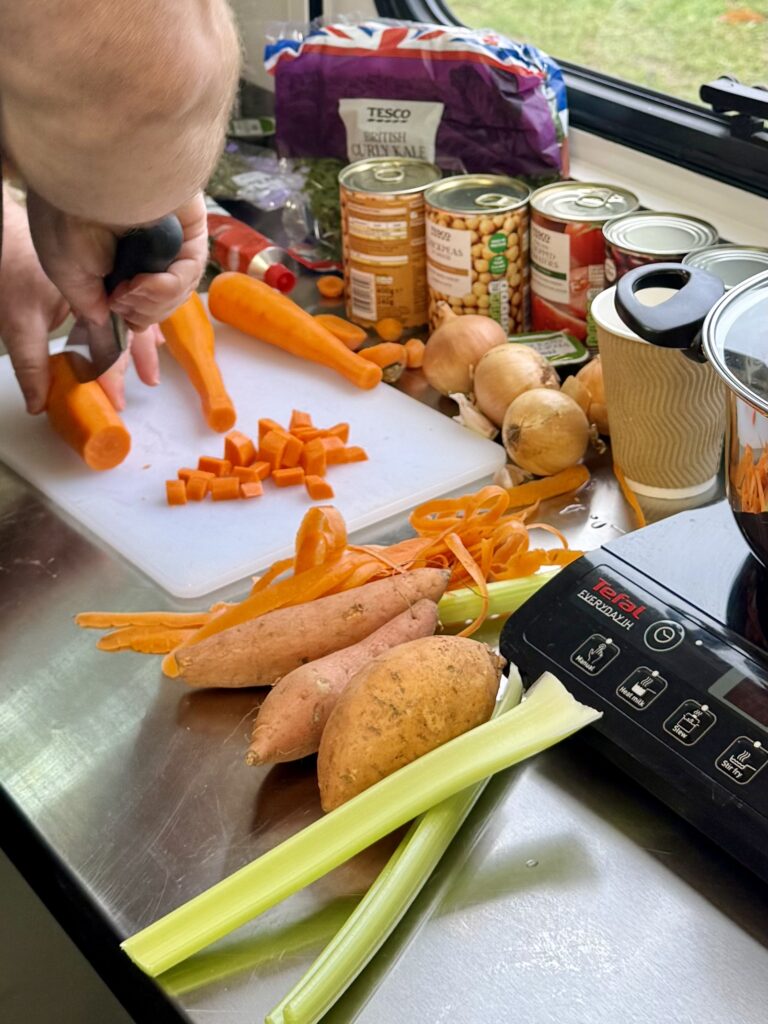
Angel Hill Food Co. Executive Development Chef Dan Farrand chose a dish that suited a wet November day and priced the ingredients at two supermarkets. At the time of the workshop, a whole batch cost around £6.26 at Aldi or £6.72 at Tesco. When one participant asked whether to leave the vegetables chunky or blend them, Dan explained that either would work. They could blend the stew into soup, spoon it over a jacket potato or add chilli and serve it with rice. Each version started with a recipe they’d already cooked themselves.
Reflections on the Day
Dan said, “Days like this remind me of the difference we can make as a business when we share what we know. Cooking alongside someone, helping them adapt a recipe to their taste and budget, and seeing them realise they can make it again at home is a practical way we can support their wellbeing. Food is at the heart of what we do, and so are the people we feed.”
By the end of the workshop, there was stew to take home and talk of a return to the farm kitchen. One participant suggested getting together once a month to cook. Everyone had a say in what would go on the menu. “We’re going to put it on the group chat and have a vote.”