Making sustainability part of everyday catering means looking across the whole operation, from the ingredients we source and the food we serve to the products used every day across our sites.
For Angel Hill Food Co., it’s about continually finding practical ways to reduce waste, use resources more effectively and make responsible choices that work in busy catering environments.
Reusable drinkware is one area we are exploring. Through our work with Circular&Co., we are looking at how reuse can become part of everyday operations, helping to reduce reliance on single-use products and supporting a more circular approach to the resources we use.
Looking Beyond the Plate
Food is central to our sustainability work, including our focus on responsible sourcing and carbon reduction. The wider catering environment also presents opportunities to make a difference, particularly where products are used frequently and can generate ongoing waste.
For contract catering, the opportunity lies in finding approaches that make sense environmentally and work within the practical demands of each site.
Making Reuse Work in Everyday Operations
Reusable drinkware can help reduce reliance on single-use alternatives, provided the system around it is designed well.
Return points need to be easy to find, processes must be straightforward, and customers and colleagues need to understand how the system works. The experience should fit naturally into the working day, with minimal disruption to service.
As we explore how reuse can work across our catering environments, it’s important to recognise that different sites have different layouts, customer needs and service routines. Any approach needs to reflect the setting in which it will operate.
Through our work with Circular&Co., including its Tap&Reuse™ approach, we are exploring the practical considerations involved in making reusable drinkware part of the catering experience.
Circular&Co. founder Dan Dicker has highlighted how return rates can exceed 95% in some environments when the process is straightforward and clearly communicated. This underlines the importance of designing the whole experience around the people using it, from the point of collection to the return of the cup.
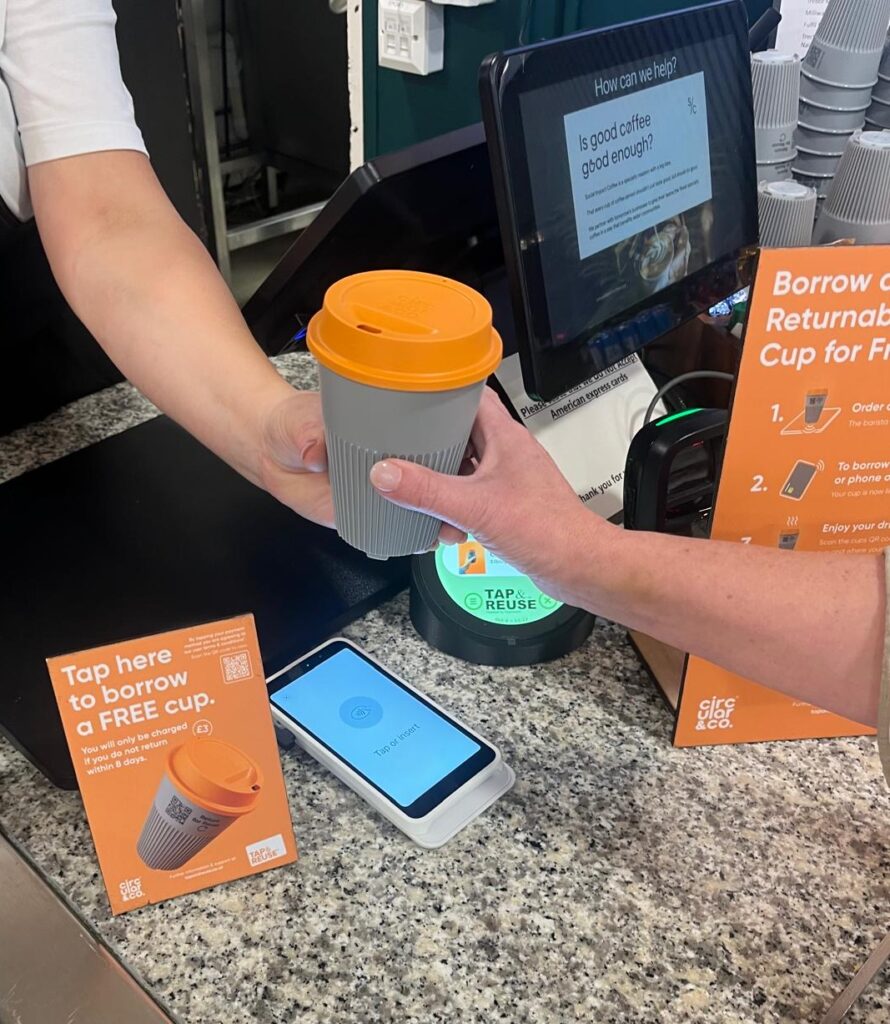
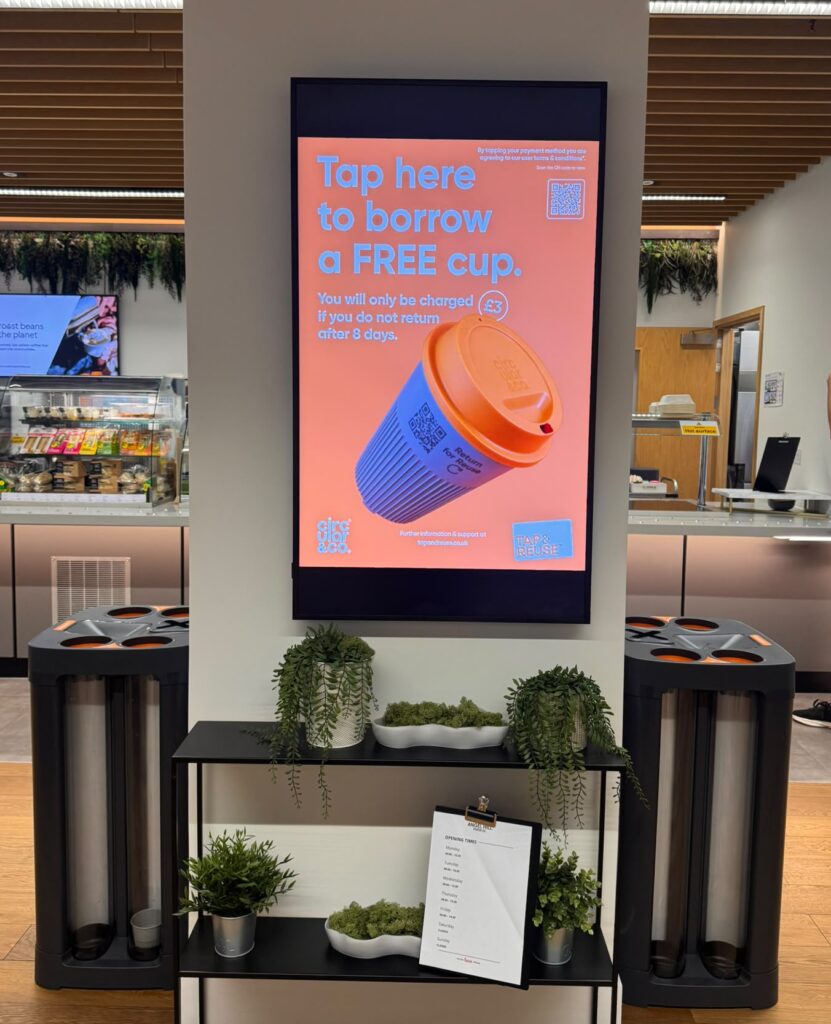
Design, Behaviour and the Role of Technology
Successful reuse depends on products that are convenient, reliable and suitable for repeated use. It also depends on making the process clear and easy to follow.
Technology can help support this. QR codes and tracking systems, for example, can provide information about how reusable products move through a site and help make the process more transparent for users.
For our catering teams, these considerations need to be balanced with service requirements, practical routines and customer expectations. A reusable model has to work for the people delivering the service as well as those using it.
This is why collaboration with specialist partners can be valuable. It brings additional knowledge and experience to the process, helping us assess how different approaches might work in real operating environments.
Building Sustainability into Everyday Decisions
Sustainability is an ongoing part of how we develop our services. Our work on food sourcing and carbon reduction continues alongside opportunities to improve how resources are used across the wider catering operation.
Circularity offers a practical way to examine those opportunities. Reuse, repair and better resource management can help reduce waste and keep materials in use for longer. The potential impact depends on how these approaches are designed, adopted and maintained over time.
Our work with Circular&Co. is part of this wider consideration. It gives us an opportunity to explore how reusable drinkware could fit into contract catering and what needs to be in place to make it practical for customers, colleagues and site teams.
The next step is to keep the focus on workable solutions and the outcomes they can deliver. Understanding how people use a system, how it fits into service and how its environmental impact can be measured will all be important in assessing its value.
Practical Progress, Built Around People
Sustainable catering is shaped by decisions made throughout the operation. Ingredient choices, menu development, sourcing and the products used to deliver a service all have a role to play.
Progress means continuing to examine where changes can make a meaningful difference, while recognising the operational realities of the environments in which we work.
Reusable drinkware is one example of how we can approach that challenge. By working with specialist partners, listening to the needs of customers and colleagues, and focusing on practical implementation, we can continue to explore ways to reduce waste and use resources more effectively.
The aim is to make sustainable choices workable in everyday catering, supporting better outcomes for customers, colleagues and the environment.